


A healthy and delicious take on gluten free banana bread, this recipe brings some nuttiness in with almond flour and walnut crumble on top.
Looking for something specific?


Also known as a Dutch baby, this baked pancake starts with a simple batter of eggs, flour, and milk. In the oven, that batter rises dramatically around the edges and turns golden and puffed - ready to be topped with butter, maple syrup, fresh fruit, whipped cream, or anything else you like.
This is one of my favorite weekend breakfasts because it feels like a treat without requiring much work. Mix the batter, pour it into the pan, and let the oven do the rest. In about 20 minutes, breakfast is ready with very little effort and plenty of impressive results.
;void(0); "Share on pinterest")
(1) Preheat the oven to 400°F. Place 2 tablespoons of butter in a 12-inch baking dish or cast iron skillet (or two 9-inch baking dishes). Put the dish in the oven while it preheats so the pan heats and the butter melts.
(2) Crack and whisk the eggs until smooth. Add the flour and whisk until fully combined, then stir in the milk, vanilla extract, and salt.
Note: Do not overwhisk. This is the key to avoid separation. See the recipe notes below.
(3) Once the oven is hot and the butter has melted, carefully remove the baking dish. Pour in the batter and return the dish to the oven right away.
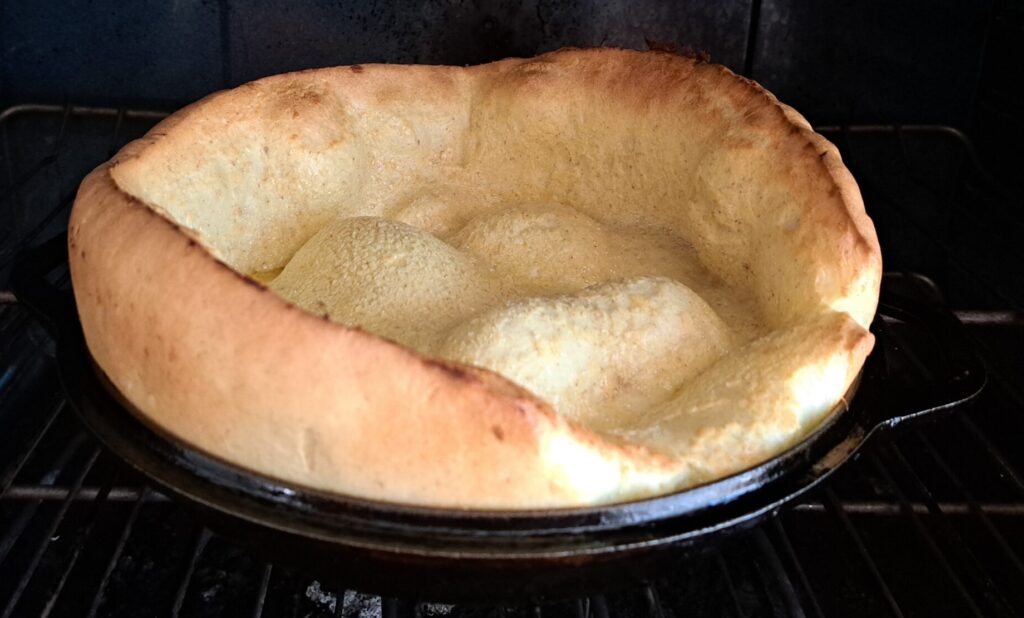
(4) Bake for about 20 minutes, or until the pancake is puffed, deeply golden, and crisp around the edges. It should rise to at least twice its original height and may bubble as it finishes baking. If it still looks pale or underwhelming at 20 minutes, give it another 5 minutes - the most dramatic rise often happens near the end.
(5) Serve warm with butter, maple syrup, fruit, whipped cream, or your favorite pancake toppings.
Note: This recipe makes a large enough pancake for 2-3 people. For a single serving, halve or third the recipe.
This is a hands-off recipe. Once the pancake goes in the oven, you're done! That said, its fun to check on a dutch baby once or twice as it bakes - especially near the end. The eggs cause the batter to puff dramatically, often rising to twice its original height before settling again as it cools. That brief moment when it first comes out of the oven - golden and towering - is one of the best parts of the recipe.
Of course, getting that impressive rise depends on the batter behaving properly. The biggest problem to watch for is the flour separating from the eggs, and giving you patches of baked egg instead of one beautiful oven pancake.
You whisk together the batter, slide it into the oven, and pull out a beautifully puffed pancake a few minutes later. Then you sit down to eat and discover that part of it tastes like… egg. Plain baked egg.
What went wrong?
The biggest challenge with a gluten-free Dutch baby is keeping the batter from separating. The solution is mostly in the mixing. If the eggs are whisked too vigorously at the beginning, the flour may have trouble incorporating evenly with the eggs and milk. I run into this problem most often when using a stand mixer; gently whisking the batter by hand until smooth is the more reliable method.
It also helps to let the finished batter rest briefly before baking. About five minutes is enough - usually just the time it takes for the oven to finish preheating. This gives the brown rice flour a chance to absorb some of the liquid, helping the batter stay evenly combined and improving the final texture.
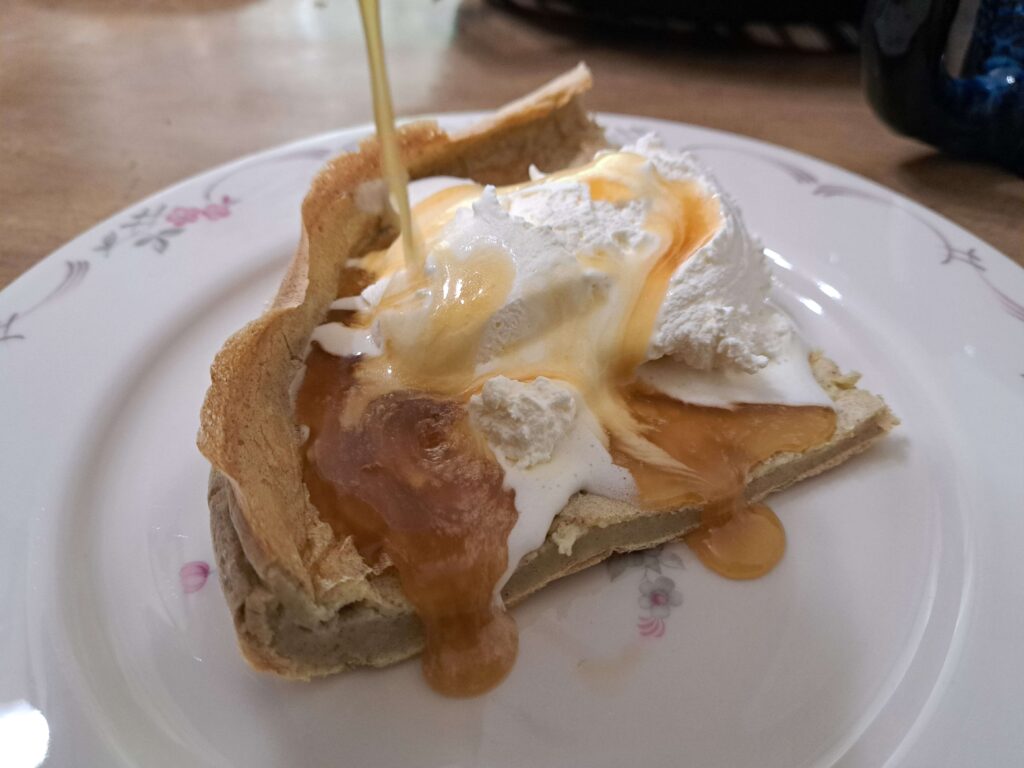
The second trouble that can befall a german pancake is density. Instead of rising dramatically in the oven, it stays low and flat. The result is still perfectly edible, but it lacks the light, puffed texture that makes a Dutch baby so much fun.
In most cases, this comes down to flour choice. Some gluten-free flours are simply too heavy to produce a good rise. Brown rice flour is a reliable option, as are certain cup-for-cup gluten-free flour blends, and buckwheat.
Brown rice flour is my go-to choice for this recipe. It blends well with the eggs, has a mild, neutral flavor, and produces a beautifully puffed German pancake. For the most reliable results, I recommend sticking with brown rice flour.
Buckwheat flour is my second-favorite option. It gives the pancake a heartier, more pronounced whole-grain flavor while still producing a good rise, especially when you use a finely ground flour such as Anthony's organic buckwheat flour.
Because buckwheat flour absorbs liquid differently, you will not need quite as much of it. Reduce the flour to 2/3rd of a cup, then follow the rest of the recipe as written.
Many gluten-free flour blends also work well in this recipe, particularly cup-for-cup blends. Most contain a combination of lighter flours and starches, which helps the batter puff dramatically in the oven.
I have had good luck using Bob's Red Mill All Purpose Flour in this recipe. Simply replace the cup of brown rice flour for Bob's Red Mill All Purpose Flour and proceed with the recipe as written.
One blend I do not recommend is Namaste Perfect Flour Blend. In my tests, it consistently produced a pancake that was too dense and did not rise well.
Once you have a smooth well-mixed batter, the final step in ensuring the perfect gluten-free German pancake is the pan.
Start with a thoroughly preheated pan and fully melted butter. The easiest way to do this is to place the pan in the oven while it heats. I prefer cast iron because it holds and distributes heat exceptionally well, but a pie plate, cake pan, or casserole dish can also work. The important thing is that the pan is hot enough for the batter to begin cooking the moment it is poured in.
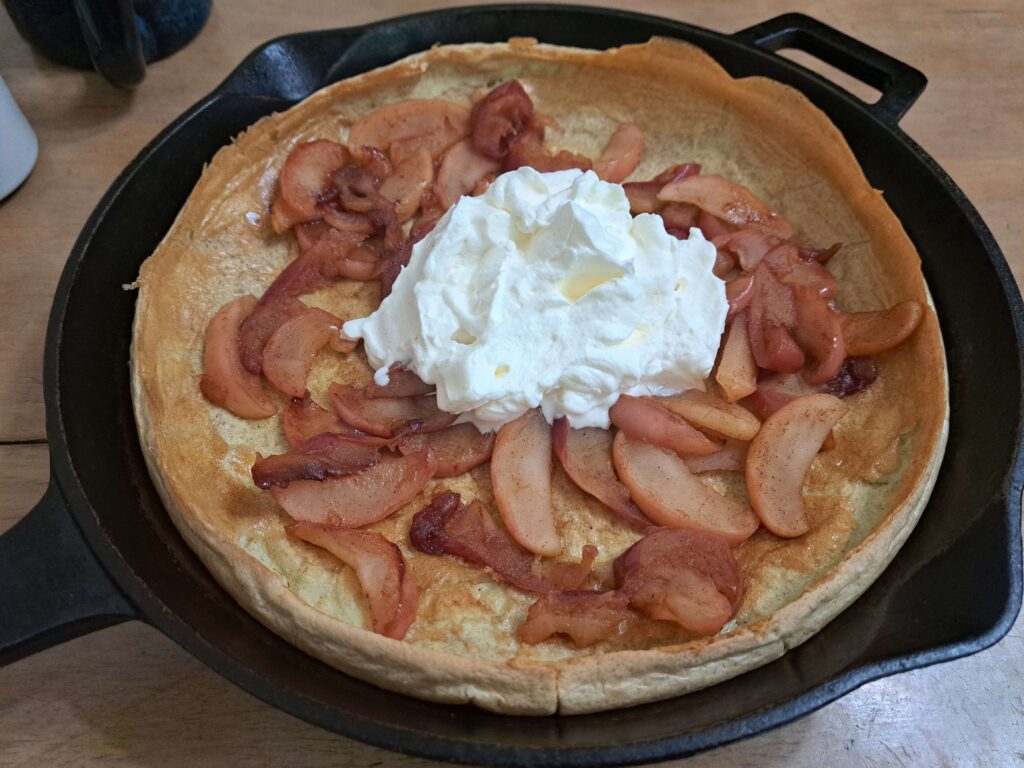
Pan size matters, too. If the batter is spread too thickly, it will take longer to puff and may not rise properly at all. This recipe fits well in a 12-inch pan or two standard pie plates. When in doubt, choose a slightly larger pan and spread the batter a little thinner.
A warm German pancake is delicious with all the usual pancake toppings: butter and maple syrup, fresh berries, sliced peaches, fruit preserves, powdered sugar, or a generous spoonful of whipped cream. You can keep it simple or pile on several toppings for a more indulgent weekend breakfast.
Our family favorite is whipped cream with homemade butter syrup. The syrup is sweet, buttery, and slightly tangy, and you can make it on the stovetop while the German pancake bakes. When I don't have time or energy to make the butter syrup, I also enjoy spreading a little fruit preserve over each slice.
There is no difference between a German pancake and a Dutch baby. These two names are used interchangeably for the same type of fluffy oven-baked pancake.
There are a few reasons why your German pancake might not puff up:
For more information check the recipe notes.
Short answer: no. I find brown rice flour to be the most reliable gluten-free flour for this recipe, and do not recommend substitutions.
For a slightly longer answer, and substitution advice, check the recipe notes.
No! But I do recommend using one. Cast iron holds heat very well, meaning that you will get a superior rise and a crunchier crust.
Unfortunately your batter separated while baking. To make sure your eggs and flour bind to each other, whisk the batter by hand (not a stand mixer) and then allow it to sit for at least five minutes before baking.
Despite its name, the Dutch baby as we know it is an American dish. It is most closely associated with Manca's Cafe, a family-owned restaurant in Seattle that became famous for serving small, dramatically puffed pancakes during the first half of the twentieth century.

According to the history preserved by the Manca family, restaurant owner Victor Manca developed the dish, and one of his daughters may have given it the name "Dutch baby." The explanation is that "Dutch" is the child's mispronunciation of Deutsch (i.e. German).[source] It is a charming story, though the exact details are difficult to confirm this many years later.
Manca's may have coined the name and popularized its own version, but the general idea of an oven-baked puffy pancake was already in circulation. Victor Hirtzler included a recipe simply called "German Pancake" in the 1919 edition of The Hotel St. Francis Cook Book. The recipe goes as follows:
German pancakes. Two eggs, one-half cup of milk, one-half cup of flour, a pinch of salt, a little nutmeg and one teaspoonful of sugar. Mix well. Have a large frying pan ready with hot butter. Be sure and have the butter run all over the inside of the pan so the pancake will not stick to the sides when it rises. Pour in the batter and place in oven. When nearly done, powder with sugar and put back in oven to brown. Serve with lemon and powdered sugar.[source]
A familiar formula, right?
So why the name "German pancake"? Many sources - including the Manca family - suggest that it was inspired by the German Pfannkuchen. That may be true, though traditional Pfannkuchen are usually cooked on the stovetop and look more like what Americans would call crepes.[source]
In practice, the Dutch baby has just as much in common with a popover or Yorkshire pudding. All three begin with a thin, egg-heavy batter, and rise dramatically in the oven before sinking again as they cool. The Dutch baby is essentially the sweeter, larger member of that same wonderfully puffy family of baked goods.
Whatever its exact ancestry, the dish that came out of Seattle became something distinctly American: part pancake, part popover, and impressive enough to make an ordinary breakfast feel like a special occasion.
A healthy and delicious take on gluten free banana bread, this recipe brings some nuttiness in with almond flour and walnut crumble on top.
Fluffy and buttery, these gluten-free sourdough biscuits are an easy homemade side for breakfasts or comfort-food dinners.

