


A delicious chocolatey cake recipe, ready to be customized to your needs! My go-to cake base for birthdays and holidays.
Looking for something specific?


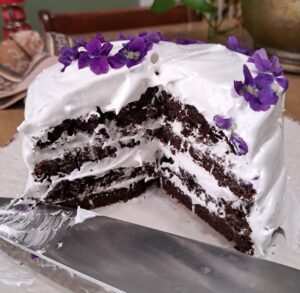
Italian meringue is sweet, but not overwhelmingly so, with a delicate vanilla flavor and a light, airy finish that keeps each bite from feeling too rich. It is especially lovely with chocolate cake, where its pillowy sweetness balances deep cocoa flavor beautifully and adds just the right touch of softness. Where American buttercream can sometimes feel dense or overly sweet, Italian meringue offers a fluffier, lighter alternative that still feels satisfying and indulgent. The result is a frosting that looks elegant, and brings a cloud-like finish to cakes, cupcakes, and other pastries.
;void(0); "Share on pinterest")
(1) Combine the sugar and water in a medium saucepan. Using a candy thermometer to track the temperature, cook over medium heat, and bring the mixture to 245°F. Make sure the sugar is covered with the water, but do not stir. Stirring can cause the mixture to crystallize.
If you do not have a candy thermometer, see the recipe notes for how to check the temperature manually.
(2) While the syrup heats, begin whipping the egg whites in a stand mixer or large mixing bowl. Beat until the whites reach soft peaks, so they are ready when the sugar syrup comes to temperature.
(3) Once the syrup reaches 245°F (or soft-ball stage), remove it from the heat. With the mixer running on low to medium speed, very slowly pour the hot syrup into the egg whites in a thin stream. The electric mixer should be on medium speed the whole time. Make sure you aim for the side of the bowl, not the whisk, as the syrup is extremely hot.
(4) After all of the syrup has been added, increase the mixer speed and continue beating. Whip until the frosting has cooled to about room temperature, about 7 minutes. Add the vanilla extract at the very end, then beat briefly to combine. As it whips, the frosting will increase in volume and become thick, fluffy, and glossy.
(5) The frosting is ready when it is cool, glossy, and holds its shape well. The side of the bowl will be room temperature or cooler to the touch. Use immediately to frost cakes, cupcakes, or other pastries.
(6) This recipe makes more than enough for a 9" cake, or a two layer 6" cake. The frosting will be easiest to pipe right after making, but you can store in the refrigerator for a few hours if you cannot use it immediately.
Italian meringue is one of those recipes that feels a little bit like baking and a little bit like candy making. You are cooking a sugar syrup to a precise temperature, then pouring it into whipped egg whites to cook and stabilize them. The process is very close to homemade marshmallows, just without the gelatin.
For this recipe, you will heat the sugar syrup to 245°F, which is at the top of the range of "soft-ball" in cooking sugar. At this point, the syrup has started to thicken, but still has enough moisture to create that soft, cloud-like Italian meringue texture. Candy makers will often describe soft-ball stage as the point where a spoonful of syrup dropped into cold water forms a soft, flexible ball that flattens easily when pressed.
If you do not have a candy thermometer, you can test for soft-ball stage by dropping a small amount of the hot syrup into a bowl of cold water and checking whether it forms that soft, pliable ball.[source] That said, I personally do not test candy stages by hand and prefer to use a candy thermometer. A good candy thermometer makes the whole process less stressful and will last you for years. I've been using this Polder thermometer with pot clip since 2023 and it is easy to use and clean.
While the idea of whipping egg whites and heating sugar syrup to a precise temperature may sound intimidating, this recipe is actually very reliable and straightforward. The sugar syrup is hot enough to cook the egg whites during mixing, which helps create a safe and consistent result every time. A candy thermometer and a stand mixer do most of the hard work for you. And after you make Italian Meringue once or twice, the whole process starts to feel much less mysterious.
Many Italian Meringue recipes will call for the inclusion of corn syrup in order to decrease the chance of crystallization during the cooking of the syrup. The thought is that the corn syrup makes it harder for the sugar to form stray crystals, which helps keep the syrup smooth.
That said, I have never had a problem with crystallization over the years I have been making this recipe. So I prefer to keep things simple and use plain sugar only. As long as the sugar is fully moistened, and the syrup is not stirred while it cooks, the syrup stays smooth.
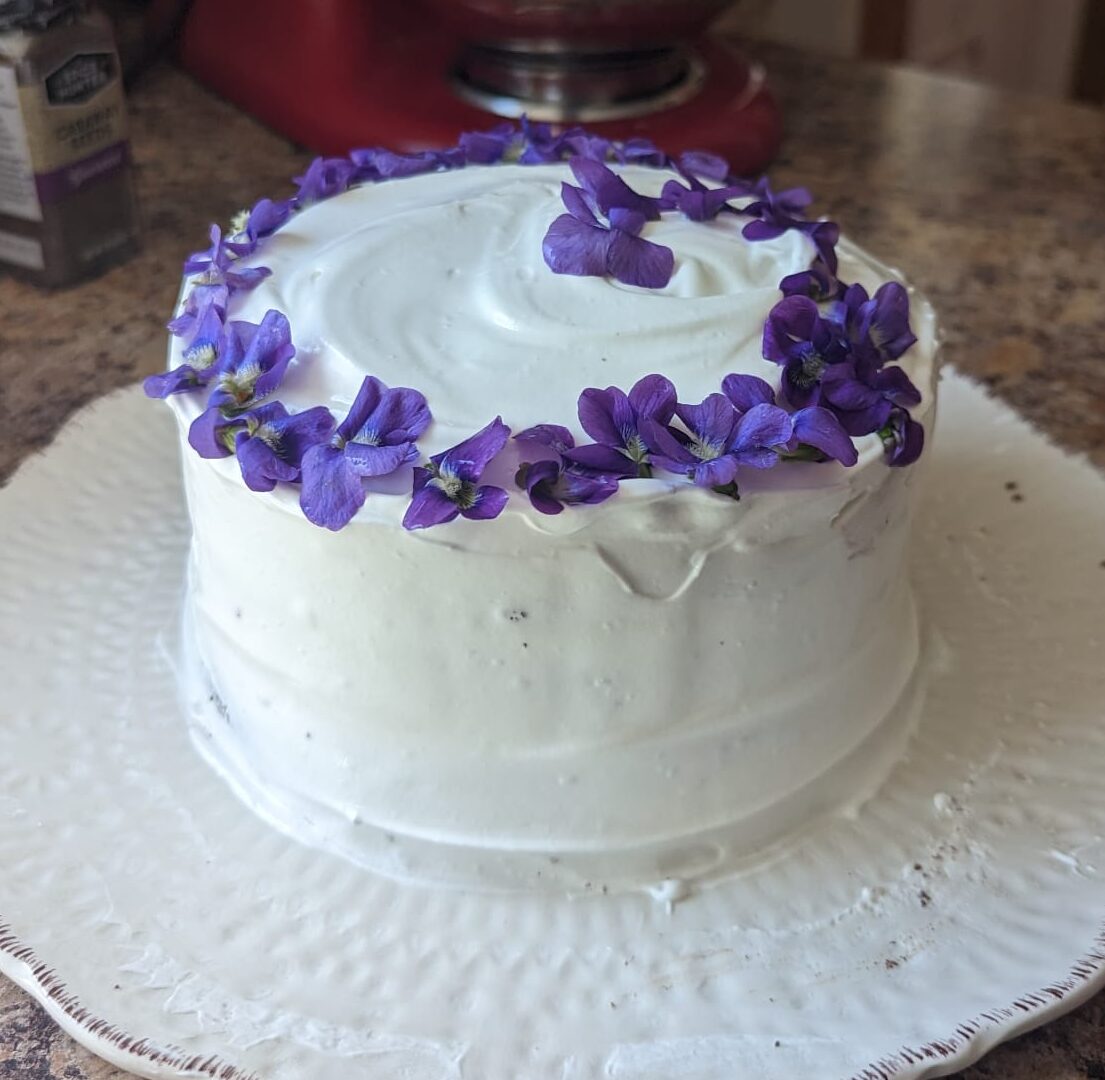
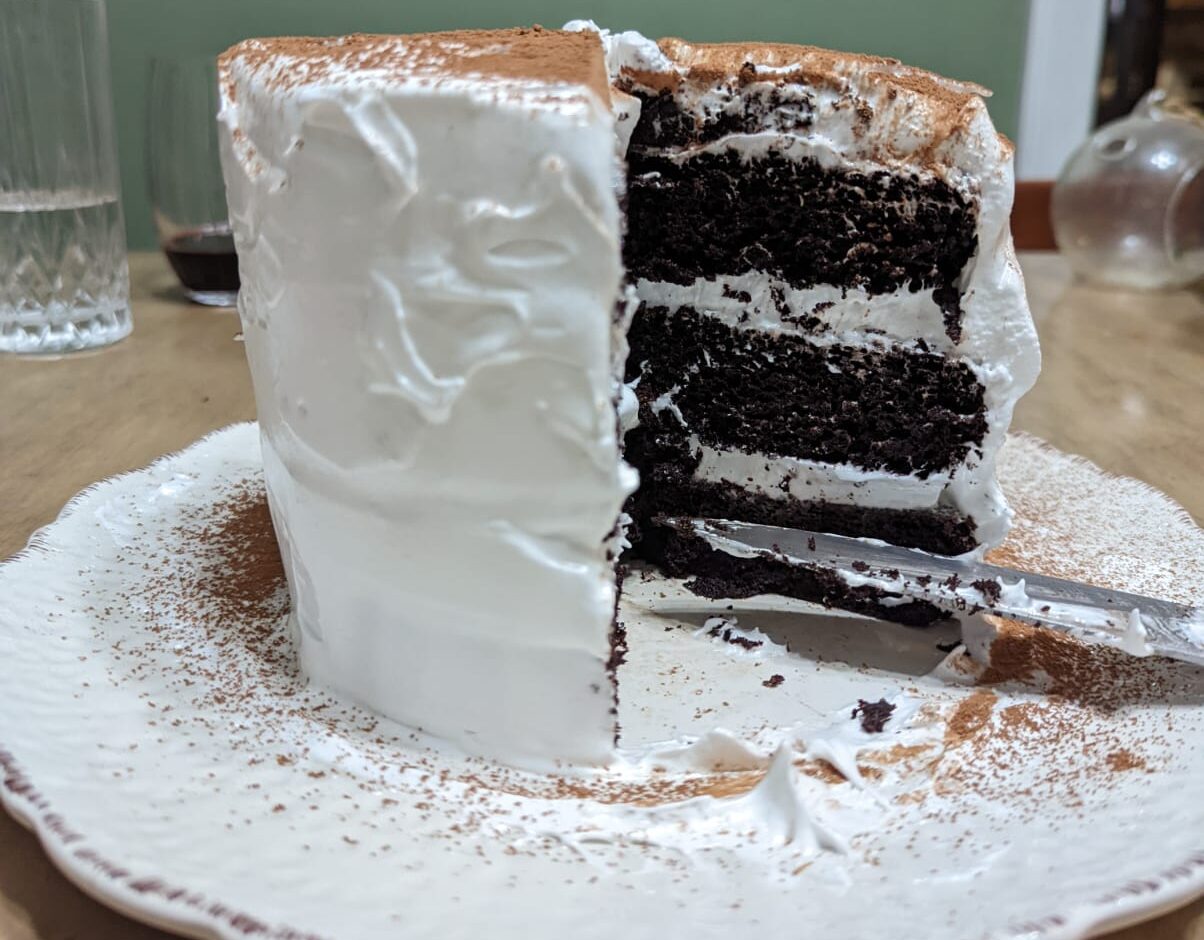

I grew up mostly using American buttercream - that classic combination of butter, powdered sugar, milk and vanilla. American Buttercream is heavy, sweet, and can really provide structure between layers of cake. Italian meringue is quite different: it is lighter, less sweet, and a little more delicate in the way it behaves.
That difference really shows up when you start building a layer cake. Italian meringue spreads beautifully and clings well to the outside of a cake, but it does not have the same structure as buttercream when used as a thick filling between layers. Under the weight of the cake, it can squeeze outward, leaving only a thin layer behind. That is one of the main tradeoffs with this frosting.
The solution is to add structure of some kind.
If you don't mind making a little bit of another type of frosting, you can always add some extra support to your layers by including a bit of buttercream as a dam around the Italian Meringue between each layer. This will let you keep your flavors simple - just marshmallowy meringue filling - without going as heavy as frosting with 100% buttercream.
Another option is to support the meringue filling with fruit. Fresh berries can act as little spacers between the cake layers, helping to hold them apart so the Italian Meringue does not get pressed quite so flat. Blackberries work especially well for this, since they are sturdy and pair beautifully both the frosting and many cake flavors.
To do this, arrange the berries evenly over the cake layer, then fill in the spaces around them with the Italian Meringue. If needed, you can secure a few of the berries with toothpicks in key spots for extra stability, especially on a taller cake. The end result is not only more structurally sound, but also especially delicious, with the tart fruit balancing the sweetness of the frosting.
If you are considering adding another flavor, you can always make a more solid filling. I recently made a chocolate cake with Italian Meringue frosting and peanut butter filling. The peanut butter could support the cake layers, and I was even able to mix some meringue filling with the peanut butter without compromising on structure. This approach would not necessarily work with, say, a soft jam or curd. But peanut butter, a ganache, or a more solid custardy filling would all work well.
The bottom line is that there are lots of options when working with Italian Meringue - you just have to keep in mind the differences between it and other frostings.
Technically no, though I greatly recommend one. If you want to know how to check whether the sugar syrup is done without a thermometer, see the recipe notes.
No! While the hot sugar syrup requires a little extra care, Italian Meringue is very stable and comes together in approximately 15 minutes.
Yes, but you may need to add some extra structure to support the more delicate meringue if you intend to stack your cake very tall. See the recipe notes for more ideas.
If your sugar syrup crystallized, it is probably because it was stirred or moved around too much. When you start your syrup, make sure all the sugar granules are underneath the water, and then do not stir or agitate it while it heats up.
Yes! None of the ingredients in a traditional Italian Meringue contain gluten. As an added bonus, it is also dairy free!

My family is gluten free for health reasons, so I am always happy when a recipe is naturally gluten free from the start. This one is exactly that: no special substitutions, no complicated swaps, just sugar, water, egg whites, and vanilla doing what they were meant to do.
It is also naturally dairy free, which is what first drew me to Italian meringue a few years ago. For a stretch of time, I needed to avoid dairy while nursing my baby daughter, and between that and our usual gluten-free baking, dessert started to feel a little complicated. Finding a frosting that was naturally both gluten free and dairy free felt like a real win, and this one has stayed a favorite ever since.
At its heart, meringue is a simple idea: whipped egg whites and sugar. And while electric mixers have certainly made life easier, dedicated cooks were beating egg whites by hand long before modern meringue ever got its name.

In al-Warraq's The Book of Dishes from 10th century Baghdad there is a mention of a candy recipe called Harrani Natif. This recipe involved heated honey, beaten egg whites, spices, and the chef's choice of dried fruits or nut additions. In the translation of the recipe by Muna Salloum and Leila Salloum Elias the basic steps of heating sugar (or honey in this case), and then cooking and whipping eggs whites is very reminiscent of modern swiss meringue or nougat. And the final instruction really puts into perspective what it was like to make egg white based recipes before the invention of the modern electric whisk, as al-Warraq explains,
"The amount of time needed to beat it is three hours until it firms up, God willing."[source]
Needless to say, this was a candy for Caliphs, Kings, and nobles. The technique was popular enough, however, that it eventually made it from Baghdad to Europe and, by the 16th century, had informed the development of the Spanish Turrón and Italian Torrone, which are both similar nougat-like candies.
By the early 1600s, we can see a very recognizable meringue ancestor appear in European cookbooks. In 1604, Lancelot de Casteau included a recipe for neige sèche, or "dry snow," in his Ouverture de Cuisine. This "dry snow" was a cooked meringue, quite similar to Italian meringue, though flavored with rose water and spices.[source] De Casteau described it as cream-like, which suggests a texture not unlike the Italian meringue we know today, though it was served on its own rather than used as a frosting. De Casteau served as chef to several bishops of Liège in present-day Belgium, and wrote his cookbook near the end of his career, likely recording recipes he had been preparing for many years.
That same year, an English meringue ancestor appears in Elinor Fettiplace’s Receipt Book under the name "white bisket bread," made with sugar, flour, and egg whites. An interesting thing about Fettiplace's Receipt Book is that it was not, in fact, published in her lifetime or necessarily meant to be. Instead, it was a family cookbook which was passed along to Fettiplace's niece, and only published by her family in 1986.[source] Fettiplace herself came from an upper-class family, but she was not necessarily the "inventor" of the recipes she recorded. As with so many old cookbooks, she was likely writing down a preparation that had already been made in England, and perhaps elsewhere in Europe, for quite some time.
The word meringue itself does not appear in print until later in the seventeenth century, most commonly tied to François Massialot's 1692 cookbook, Nouvelle instruction pour les confitures, les liqueurs et les fruits.[source] Massialot was something of a celebrity chef in his day, who worked for the Duke of Orleans and planned dinners at Versailles. But we do not know if he gave meringues their name - the origin of the word is murky, even if the technique itself was well known in the 17th century.
However uncertain the origin of the name, the appeal of meringue is wonderfully clear. It takes a few humble ingredients and turns them into something light, elegant, and unexpectedly special. If you are looking for a frosting that feels lighter than buttercream, a little more elegant, and naturally fits both gluten-free and dairy-free baking, Italian meringue is your answer. It takes a bit of attention, but the process is far more approachable than it first appears. And your reward is a delicious pillowy swirl of marshmallowy goodness.
A delicious chocolatey cake recipe, ready to be customized to your needs! My go-to cake base for birthdays and holidays.

