Looking for something specific?


For mint, the question is, "how do I make it stop?"
In all seriousness, however, mint is an amazing herb and well worth a place in your garden. It is fragrant, flavorful, remarkably resilient, and useful in everything from summer drinks and savory sauces to old-fashioned mint jelly. It is also an extremely hardy perennial that spreads aggressively, which means a healthy plant can become a healthy patch surprisingly quickly.
My garden is located in Illinois Zone 6a. We were recently upgraded from USDA Zone 5b, based on the fact that our average minimum temperature had risen. I've been growing mint for over a decade, both before and after the change. During that time, our crazy midwestern weather and temperature swings have stayed consistently crazy. But as a rule, I still expect the winter to be frigidly cold and the summer to be hot and humid.
Fortunately, none of that matters for mint. Mint loves Illinois' hot summer continental climate. And most varieties of mint are hardy through at least zones 3-9. So if you are in the continental USA, you can probably grow mint just fine. There are just a few minor things to keep in mind.

The good news is that growing mint in Zones 5 or 6 is not particularly complicated. Mint is a hardy perennial, tolerant of different light conditions, and perfectly capable of surviving a Midwestern winter. Give it reasonable soil, sufficient water, and a little sun, and it will generally take care of the rest. It does have a few preferences that determine how bushy vs. leggy the plant may get, but generally it will live. More commonly, it will thrive.
In fact, it generally does so well in Illinois, that at the time of writing this, the University of Illinois Extension barely bothers to explain how to grow mint at all, instead simply counselling to plant mint in a container.
Mint, as a rule, prefers full sun to partial shade. The hottest summer sun may make it a bit wilty, especially without watering, but too much shade and it will get leggy. I grow my mint in a full sun location with hardscapes around, and it is happy for the vast majority of the growing season. I just need to do a deep water of the bed a few times during the height of summer heat - usually July.
Because mint spreads via underground roots, it will expand aggressively every year. Expect to be weeding it out of the space allotted to nearby plants unless you contain it in some way. I personally do not mind this process - there are definitely advantages to having a very full garden. But it does mean that you should think twice before planting mint next to a delicate plant whose roots might be upset by constant disturbance from the monthly mint-fight.
Mint should be planted in the spring. Yes, the plant is quite hardy, but that is once it gets established. Plant mint before it gets too hot in the year, so that it has time to get established.
It would also be reasonable to plant mint in the fall once the summer heat is over, but it will have less time to get established before winter frosts.
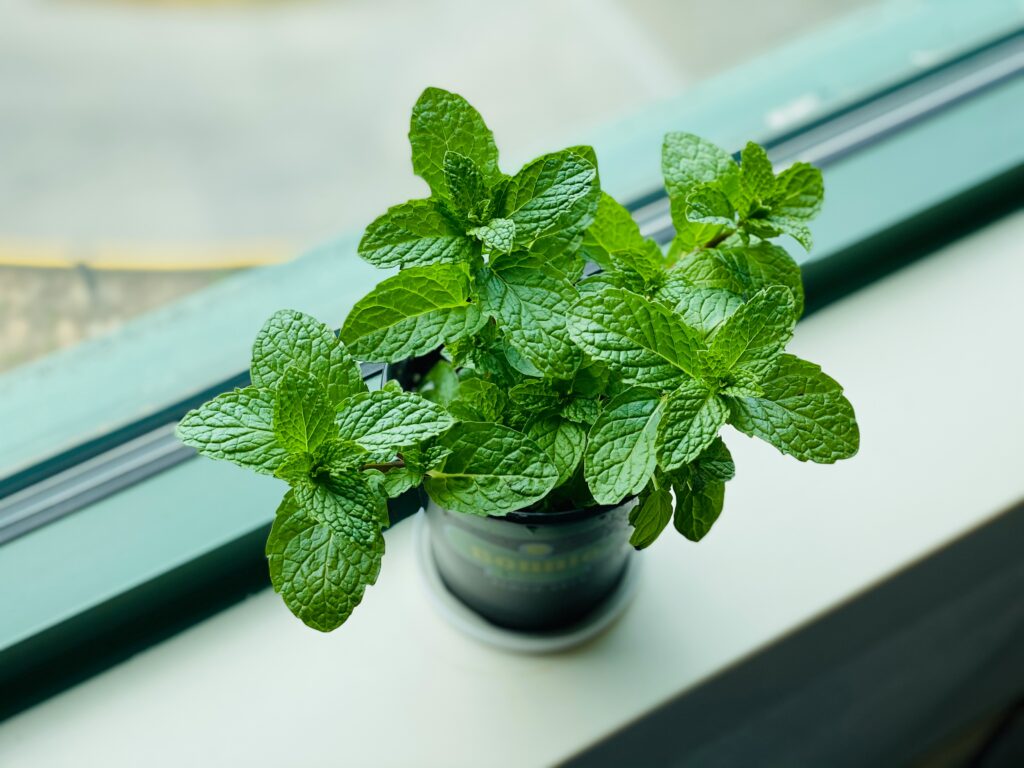
... in the ground, that is. Of course, you should grow mint. That is why we are all here, after all!
The primary concern with mint in the Illinois climate is containment. You can do this in a few ways:
Keeping your mint in a pot is the classic solution to the aggressive mint problem. This is how I started my garden, and it was relatively happy in its terracotta pot.
But the thing is... mint wants to grow. It sends out those runners regardless of whether it has the room or not. In my case, the mints roots went round and round the - relatively large - pot. This strangled the plant. It was not very happy by the time I finally rescued it.
Now the mint survived its self-strangulation. The pot did not. You see, the mint roots had been pushing outwards as they circled the pot, so the whole thing had a solid unrepairable crack in it by the time I moved the mint. So caution for would-be container mint growers: it will try to escape. Granted, the pot may have been part of the problem. A plastic or resin pot might perform better than the terracotta pot. But I stand by my warning.
There is also the option of a hybrid solution: cut the bottom out of a large plastic pot, and sink it into the ground deep enough that the mint roots are contained. In theory, this should keep the mint contained.
I have tried this, and it did not work out for me. The difficulty is that having a large pot rim sticking out of the ground is not very aesthetic. But if you do not give the pot clearance below and above ground, then mulch and leaves will cover it in a few seasons and the mint will still escape. And you will have a plastic pot in the ground waiting to surprise you if you happen to want to re-organize the bed. I think this hybrid solution would work well for a year or two, but not for the long run.
As a result, I keep my mint in the ground, and let it grow naturally. I do have to weed it out from the lavender and poppies fairly frequently, but the good news is that the other likely members of an herb garden are nearly as hardy and stubborn as mint. So this approach has worked for me.

Mint rarely produces a polite little harvest. Once it gets growing, you will need something to do with all those fragrant leaves. The challenge, I found, was that so many recipes call for mint extract or mint chips - not fresh mint. And some of the advice I have seen on using fresh mint has not worked out so well. So here are a few tried and true approaches.
Fresh mint leaves can, of course, be made into mint tea. Tea is a great way to enjoy fresh mint flavor, hot or cold. I prefer it sweetened with a little bit of honey.
The key to making mint tea is to not burn the leaves. Do not just set a pot of water to boil with mint leaves already in it - the result is less than appetizing (guess how I know!). Instead, approach it much as you would making a cup of black tea: boil your water, and then pour it over a handful of fresh mint leaves. Allow it to steep for approximately 5 minutes, or to taste.
You can drink your mint tea straight, mix it with lemonade or other refreshing flavors. Or you can treat it like an infusion, and use it to flavor other things.
A mint infusion is just a mint tea. In fact, it is the most correct way to refer to mint tea... tea, after all, is its own plant, native to warmer climes. It just got so popular that we started using it to refer to all warm herby beverages. But I digress.
For any recipe which uses water, you can use mint infusion instead for flavoring. For instance, you could make a mint Italian meringue by using mint tea instead of the water and boiling it with the sugar. To make your mint infusion for use in another recipe, boil the desired amount of water, and pour it over mint leaves. The ratio should be approximately 1 cup of water to 1 loosely packed cup of mint leaves. Allow the infusion to steep for up to 20 minutes, depending on how strong of flavor you want, and then strain out the mint leaves. Use the resulting infusion as you would water in your recipe.
One possible use for a mint infusion is a mint simple syrup. This is a simple mixture of water, mint, and sugar. Make your mint infusion as normal, and then put the resulting strained mint tea into a pot with an equal amount of sugar. Heat until the mixture is at least simmering, and then allow it to simmer for at least 5 minutes. You want the sugar to completely dissolve, and to not separate the moment the syrup cools. Cook longer for a thicker syrup.
Use the syrup with seltzer water to make a refreshing mint soda, or combine it with your choice of spirits for a summer cocktail. The syrup will stay good in the fridge for up to a month. Toss it if it starts to mold, smells off, or turns cloudy.
In the same way that you can infuse water with mint, you can also infuse milk or cream with mint. Instead of boiling your dairy, just bring it to a simmer and then turn off the heat and immediately add the mint leaves. Allow to steep until cool, then strain out the mint leaves.
You can then use the mint-flavored milk or cream in any recipe which calls for such. For instance, you could make a mint-flavored ganache, or a mint-flavored white chocolate mousse. You could also bake with the minty milk, if your recipe calls for milk. The dairy carries the mint flavor very nicely.
Another approach to adding mint to baked goods is grinding it up with the sugar. This works well for cake or cookies. For this approach, you will need a spice or coffee grinder. Add equal parts of sugar and loosely packed mint leaves, and then grind them together until you have something resembling green sugar. There should be no large leave fragments left.
Use your sugar in your recipe as you usually would. You may need to adjust slightly for the moisture that the mint is adding, but it should not be much.
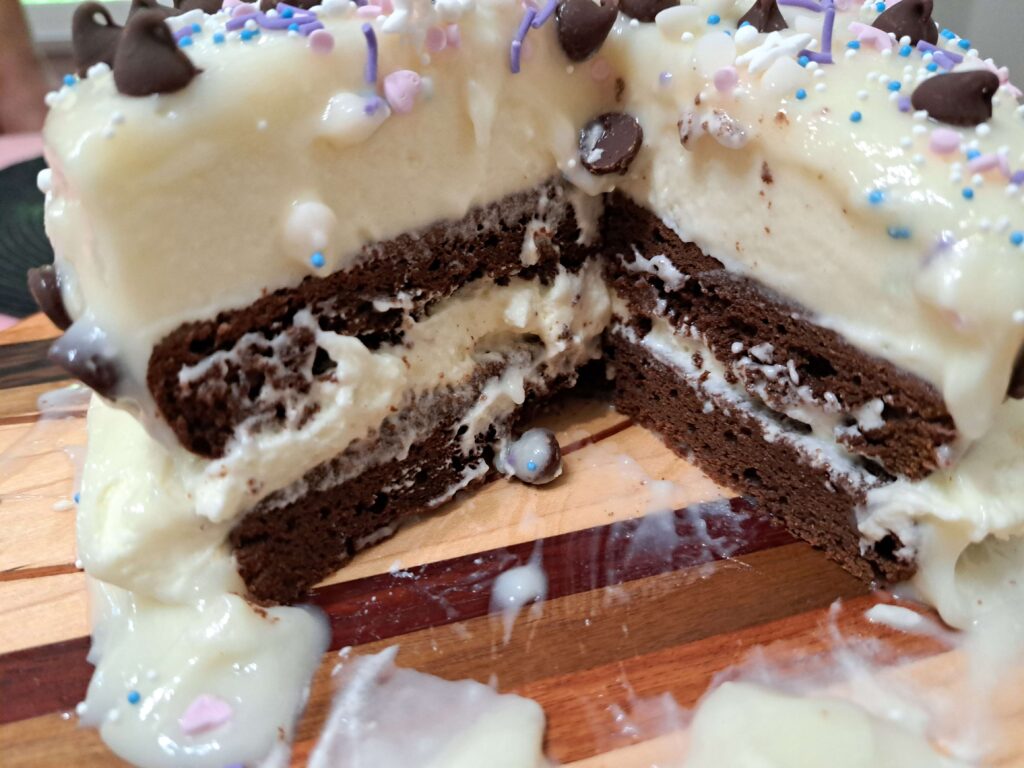
I have used this approach with chocolate cake to make a mint-chocolate cake, and it came out amazing.
General advice aside, here is a recipe or two I have developed using fresh mint:
Mint can be harvested throughout the growing season, once the plant has fully leafed out and has enough foliage to spare. The best time to harvest is in the late morning, after the dew has dried but before the day has gotten too hot. Use clean scissors or pruners to cut whole sprigs just above a pair of leaves - this method is cleaner, and quicker, than picking leaves one by one.
The best season to harvest mint is right before the plant blooms, which is early to midsummer in my garden. That said, you should not let the specter of the “perfect time” or “perfect season” keep you from harvesting your mint. It will still taste good if you pick it in the afternoon or after it has flowered. The best thing you can do for your mint plant is to harvest it regularly. Frequent cutting encourages fresh growth, and in my experience, that new growth is the prettiest and least likely to be dirty or bug-eaten.
Once you have a few harvested mint sprigs, rinse them thoroughly under cool running water, then spread them on a clean towel to air-dry for at least 30 minutes. This gives the leaves time to dry gently and allows any bugs that hitched a ride inside, but were not dislodged by the water, to be on their way. There is always one.
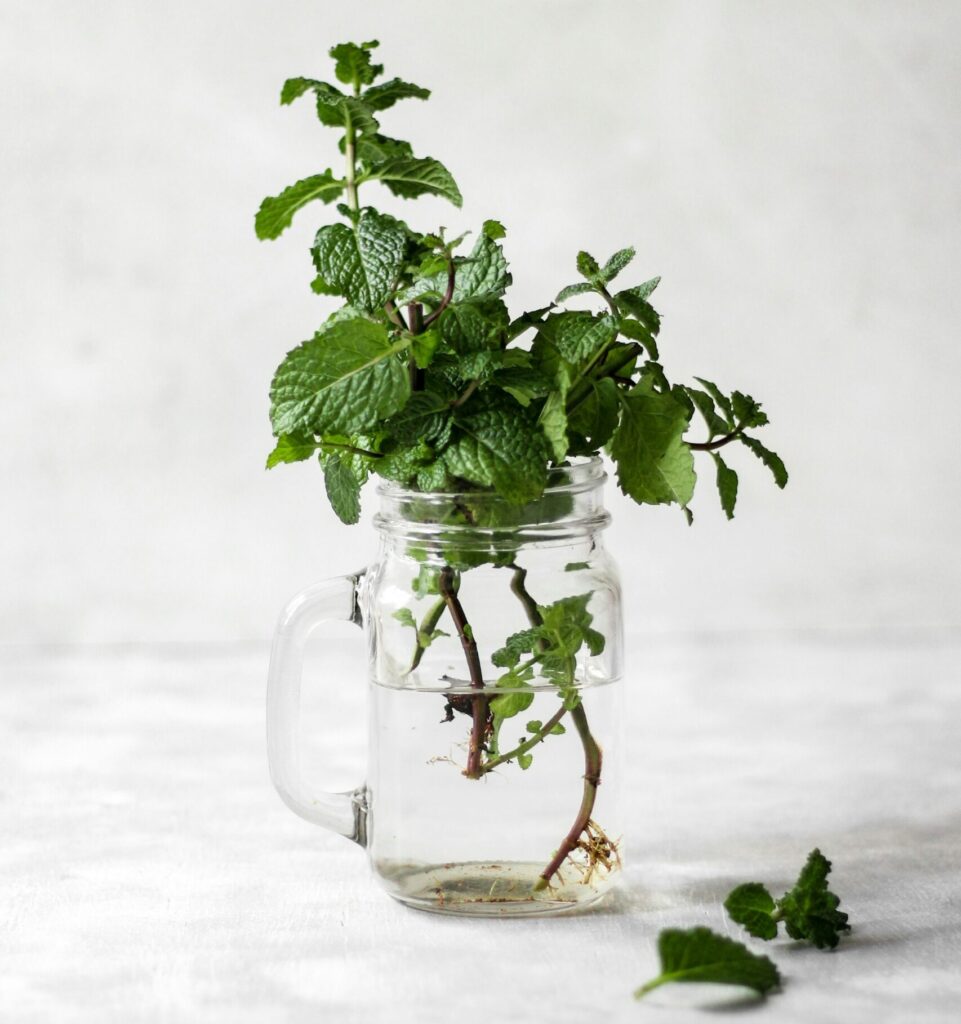
If you do not plan to use your mint immediately, wrap it loosely in a paper towel and place it in an open or perforated plastic bag in the refrigerator. You can also trim the stems and stand the sprigs in a cup with about an inch of water, much like a small bouquet, before placing them in the refrigerator. Either way, the mint should remain fresh for at least a few days.[source]
It is easy to think of mint as one plant with one familiar minty flavor. In reality, Mentha is a whole genus of species, hybrids, and named cultivars. Some taste cool and sharp, while others are milder, or bring fruity notes to the table. They are all mint, but they do not taste exactly the same.
At the time of writing, I have peppermint and chocolate mint growing in my garden. Both have survived our Illinois winters without trouble. The chocolate mint is the more prolific of the two, and also the prettier plant, with its dark stems and dark green foliage. The peppermint in turn looks like the lush green classic mint. The two look rather nice together, and fight it out among the other herbs of my garden.

Peppermint (Mentha × piperita) is the bold one. Its strong, cooling flavor is probably what most of us picture when we hear the word "mint" thanks to its familiar use in candy canes, peppermint patties, tea, and toothpaste.
Peppermint is actually a natural hybrid of water mint and spearmint. It grows upright, usually reaching one to three feet tall, and spreads rapidly through rhizomes. It is hardy in USDA Zones 5 through 9, making it a reliable perennial in Illinois.[source]
Because of its assertive flavor, peppermint works particularly well in tea, chocolate desserts, ice cream, syrups, candies, and mint jelly. A little can go a long way. This is not necessarily the mint to add by the handful to a delicate fruit salad, but it is excellent when you want the mint flavor to be unmistakable.

Spearmint (Mentha spicata) has a milder, sweeter flavor than peppermint. It is still distinctly minty, but without quite as much of peppermint's sharp, cooling edge. That makes it one of the most versatile mints for cooking.
Use spearmint in tea, lemonade, fruit salad, peas, lamb dishes, yogurt sauces, jellies, syrups, and savory salads such as tabbouleh. It is also the mint traditionally associated with mint sauce and many cocktails. If you want one general-purpose culinary mint, spearmint is probably the most useful place to begin.
The plant grows one to two feet tall and spreads both through underground rhizomes and stems that root where they touch the soil. In other words, it is no better behaved than peppermint. Spearmint is hardy in USDA Zones 4 through 9 and tolerates both Illinois heat and humidity.[source]

Let's get something out of the way right away: chocolate mint (Mentha × piperita f. citrata 'Chocolate') does not actually taste like chocolate. Do not expect it to do the hard work of cocoa for you in a recipe. It is a variety of peppermint with a fragrance that suggests chocolate mixed with mint. Think a hint of chocolate mint candy.
This is the most vigorous mint in my garden. It produces an abundance of leaves, spreads readily, and has attractive foliage that makes it look at home among ornamental plants. Missouri Botanical Garden lists it as hardy in Zones 5 through 9, so it is well suited to both Zone 5 and Zone 6 gardens.[source]
Chocolate mint is an obvious choice for chocolate desserts, ice cream, hot cocoa, coffee drinks, and tea. It can also be used anywhere you would ordinarily use peppermint, although its more complex fragrance makes it especially appealing in sweet recipes. I mix chocolate mint with peppermint in most of my recipes.

Apple mint (Mentha suaveolens), also called woolly mint, has broad, softly textured leaves and a milder, slightly fruity flavor. The plant tends to be more rounded and substantial-looking than peppermint or spearmint, with upright stems that generally grow one to two feet tall.
Like the other true mints, apple mint spreads through rhizomes and can be used as a groundcover if given enough room. It is hardy in Zones 5 through 9, placing Illinois near the colder end of its range.[source]
Its gentler flavor works well in fruit salads, cold drinks, tea, jelly, and lighter desserts. Apple mint is a good choice if peppermint tastes too strong, or if you want a mint that complements fruit rather than overwhelming it.

Pineapple mint (Mentha suaveolens 'Variegata') is a variegated form of apple mint, with pale green leaves edged in creamy white. The leaves have a mild, sweet, somewhat fruity fragrance, and the plant is grown as much for its appearance as for its culinary uses.
It is edible and can be used in tea, jelly, fruit salad, cold drinks, or simply as a particularly attractive garnish. It is hardy in Zones 5a through 9b, although it may benefit from some winter protection at the colder end of that range. Like other mints, it spreads by shallow rhizomes and should not be mistaken for a restrained ornamental.[source]
One oddity of pineapple mint is that it may send up solid-green shoots. Those shoots are more vigorous than the variegated ones and can eventually take over the plant, leaving you with ordinary apple mint. Cut them out if you want to keep the cream-edged foliage.
There are many more named mints available, including orange, strawberry, banana, ginger, and mojito mint. Some offer genuinely distinct flavors; others are variations on the same familiar theme. For most gardens, peppermint or spearmint makes the best practical foundation, while chocolate, apple, pineapple, or orange mint adds something a little more unusual.
Just remember that every new flavor of mint is also a new mint plant. Collect accordingly.
The plants we ordinarily call mint, including peppermint, spearmint, and apple mint, belong to the genus Mentha. But Mentha is only one branch of a much larger botanical family called Lamiaceae. Lamiaceae is commonly known as the "mint family," which is why the two terms are often used interchangeably, even though not every member of Lamiaceae is actually a mint.
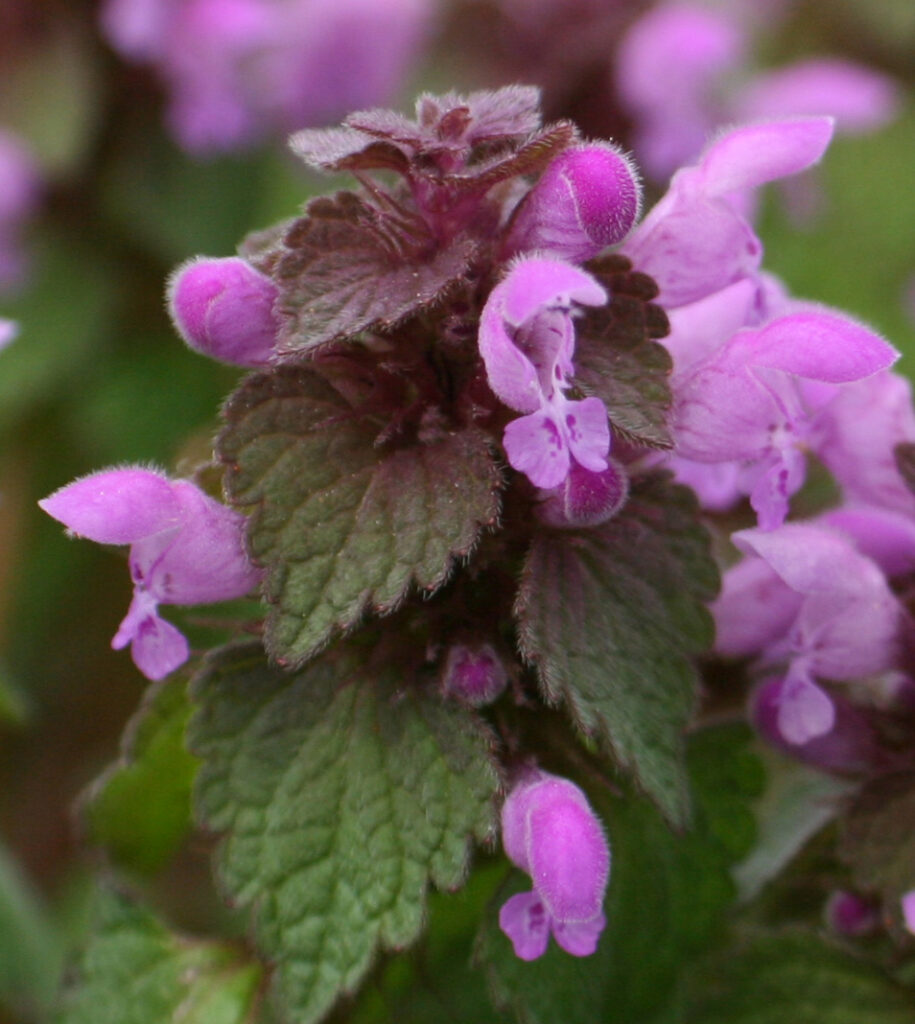
And it is a very large family. Lamiaceae contains more than 7,000 species, including an impressive number of familiar culinary herbs. Basil, oregano, rosemary, sage, thyme, lavender, marjoram, and savory are all distant relatives of mint. So are catnip, bee balm, coleus, and the creeping charlie attempting to annex your lawn.[source]
Members of the mint family often share a few recognizable characteristics. Many have fragrant leaves arranged in opposing pairs and stems that feel square when rolled between your fingers. Many also produce small flowers in clusters around the stem, sometimes packed together into tall, upright flower spikes. These characteristics are useful clues rather than absolute rules, but once you start noticing them, the family connection becomes surprisingly apparent.
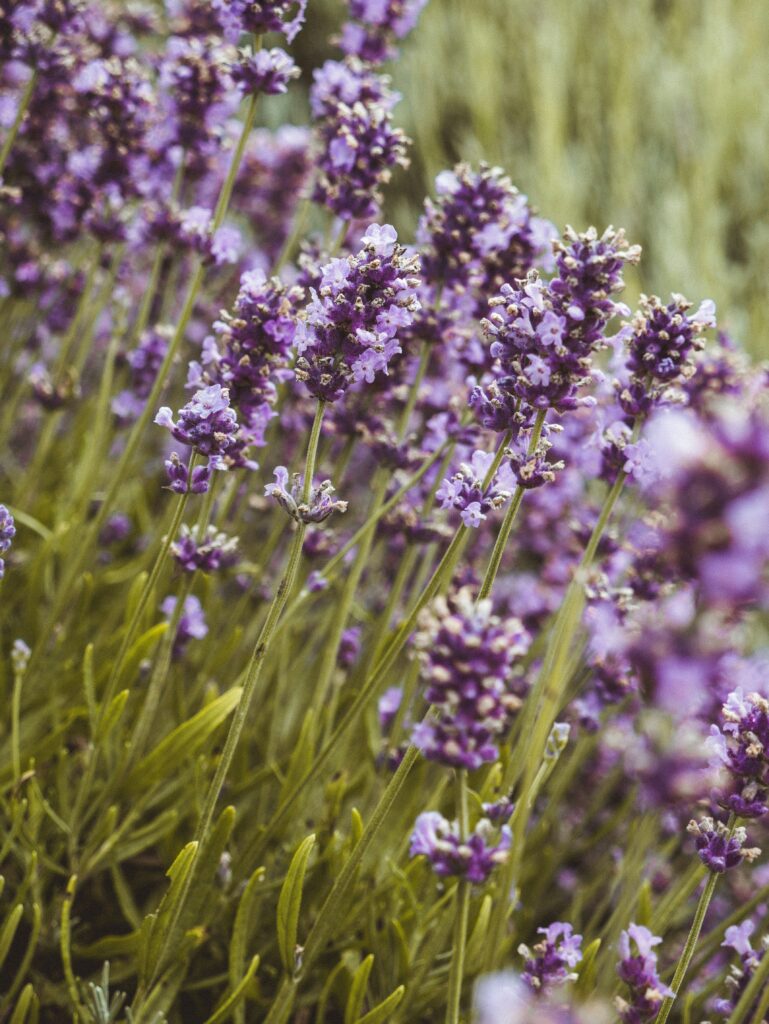
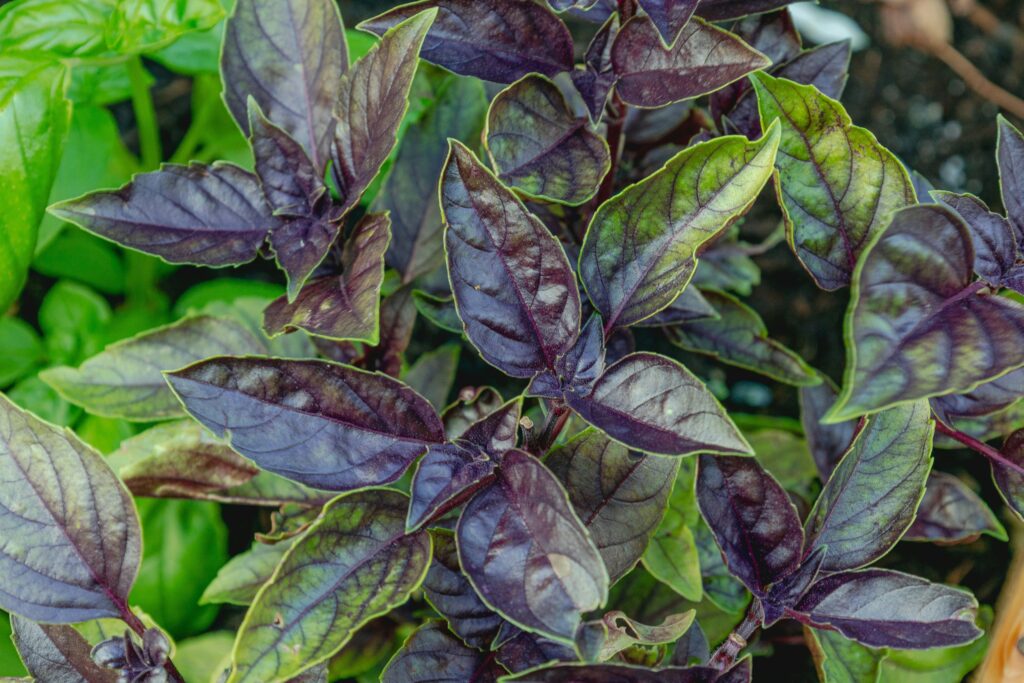
Being related does not mean that all these plants want to live in the same garden conditions. Mint tolerates more moisture and less light than many other culinary herbs. Rosemary, lavender, and thyme generally prefer sunnier, drier conditions, while tender herbs such as basil do not share mint’s enthusiasm for surviving an Illinois winter. The family includes annuals, perennials, groundcovers, shrubs, ornamentals, and plants adapted to climates around the world. It is a very large family. One should not expect every relative to get along in the same flower bed.
One of the more surprising members is chia. The chia seeds I use in gluten-free baking come from Salvia hispanica, a species of sage and therefore a member of the mint family. Unlike peppermint or spearmint, chia is generally grown for its tiny edible seeds rather than its leaves. Still, the relationship is visible in the mature plant, with its square stems, opposing leaves, and spikes of small flowers.
The many herbs in this family may differ considerably in flavor and preferred habitat, but fragrance is a recurring theme. The aromatic compounds that make peppermint taste cool, basil taste distinctly like basil, and rosemary smell like rosemary vary from one plant to another. Taken together, they make the mint family one of the most useful, and certainly one of the best-smelling, branches of the culinary family tree.
I recommend getting your mint from your local greenhouse, not the internet. You'll be able to pick out the healthiest plant, and the varieties available should be well suited to your growing zone.
But when it comes to gardening supplies, there are some universal tools which make everything so much easier.
Gloves and arm protectors protect against burs, thistles, and other prickly plants. As I've gotten older, I've realized that burdock burs make my skin break out - definitely worth skipping that gardening side effect!
Likewise, a sun hat helps extend the length of time you can safely garden outside. The summer sun can be brutal, and the danger of heat stroke on high heat and humidity days is real.
Having something to kneel on while gardening, even if its just a piece of cardboard, has saved me so many dirt stains on my jeans. But even better than cardboard is a proper garden kneeler.
And finally, soaker hoses save so much time and water during the summer. Simply hook them up, and turn the water on for an hour or so. If the hose is properly buried under the mulch, then the water will seep out of the hose and straight into the surrounding ground for the plants. Minimal waste!

Yes! Essentially every mint variety is hardy in USDA zones 5 and 6.
In fact, I am convinced its roots may grow over the winter, because it always seems like there is a new patch in the spring.
Mint grows via underground runners, known as rhizomes. These runners are relatively shallow, but still hidden by mulch and dirt, and remarkably tenacious. Unless there is a very solid barrier that extends several inches below and above ground, mint will spread.
My favorite method of mint containment is regular harvesting and weeding. But many people advise growing it in a pot, or a contained raised bed.
See my notes on planting mint above.
Two causes spring to mind: either your mint is not getting enough sun, or it is overcrowded.
Mint likes full to partial sunlight to grow well.
It also has a tendency to overcrowd itself. So if its in a sunny location, then it may be time to heavily trim and weed the mint bed. It is a hardy plant, and will bounce back healthier than ever.
Most likely, it is too dry and needs a drink!
I do not usually have to water my mint, because it is in the ground. But in the height of summer heat, it is normal for plants - even hardy mint - to get wilty. A soaker hose is incredibly useful for keeping the herbs watered without wasting water via evaporation.
Check the soil around your mint. If it is dry, then water it. If that was the problem, then the plant should perk up in a few hours.
Whenever is convenient for you!
That said, the best time to harvest herbs is late morning - after the morning dew has dried, but before the heat of the day. Simply snip off the healthiest looking stalks, then wash and allow them to air dry before use.
See my notes on harvesting mint above.
Absolutely!
Now mint has the best flavor before it flowers, but that does not mean the plant is inedible once it does. I use flowered mint all the time. Harvesting the plant will simply encourage new delicious growth.
Do you want to put in the effort to ensure that your mint does not flower?
In theory, you can keep cutting the plant back to keep it from flowering. But my experience with most herbs is that at a certain part of the summer they are determined to flower. Trying to stop them from flowering may have you cutting them back every other day.
So let them flower. The change in flavor does not render the leaves inedible, and the flowers are good for the bees.
Yes!
That said, they are all aggressive spreaders, so be prepared to have multiple mints trying to cover every inch of your garden. My experience is that they stand up to each other relatively well, however, as long as you occasionally cut them back.


According to Greek mythology, mint began with a thoroughly ill-advised affair involving Hades.
Minthe was a nymph associated with Cocytus, one of the rivers of the Underworld. In one surviving account, she had been Hades' lover before he carried Persephone away to become his queen. Minthe unwisely boasted that she was more beautiful than Persephone and that Hades would soon return to her. Demeter responded by trampling her into the ground, from which the mint plant arose. Another version gives Persephone the trampling, and transforms Minthe directly into sweet-smelling garden mint.[source]
The details vary, as details in Greek mythology generally do. The association between mint, Minthe, and the Underworld is nevertheless an old one. It is also particularly appropriate for a plant that can be trampled, pulled up, and generally mistreated without necessarily agreeing to remain dead.
The very smell of mint reanimates the spirits, and its flavor gives a remarkable zest to food.
-Pliny the Elder[source]
Mint has been consistently praised for its smell, flavor, and medicinal qualities from ancient times. Nearly 2000 years ago, in his Natural History, Pliny wrote that mint revived the spirits, and awakened the appetite. He also attributed forty-one remedies to the plant. According to him, it did everything from preventing milk from curdling, to being good for the voice, to settling a stomach ache. Truly, a wonder herb.
And Pliny was not the only ancient writer who recorded the medicinal value of mint. Dioscorides in his De Materia Medica (also written in the first century A.D.) was similarly enthusiastic, recommending mint for complaints including nausea, hiccups, and digestive trouble.[source]
On the cooking front, the common theme with mint is sauces. In the Roman Cookbook Apicius de Re Coquinaria, assembled in the 5th century or earlier, there are a multitude of recipes that include mint. Mint turns up again and again, paired with the wine, vinegar, honey, spices, and salty fish sauce characteristic of Roman cooking. These sauces were served with everything from chicken and pork to oysters and other seafood. Mint was also used, along with other herbs, to season vegetables.[source] The recipes do not suit modern taste, but the beginnings of classics like the pairing of lamb and mint are certainly present.

And mint did not disappear from the kitchen when the ancient world ended. The Forme of Cury, compiled around 1390 by the cooks of Richard II, uses it in a green sauce made with parsley, garlic, thyme, sage, wine, and vinegar. Mint also appears in a sauce for fish, a recipe for salad with oil dressing, and in an erbolat, a baked mixture of eggs and chopped herbs.[source] Of those recipes, I can personally say that herby eggs taste quite good with a little mint.
Across all of these sources, mint serves a remarkably familiar purpose. It freshens rich food, pairs well with sour ingredients like vinegar, and adds flavor to everything from vegetables and eggs to meat and fish. Our tastes have changed over the centuries, but the appeal of mint has not.
Fortunately, you do not need to make Roman fish sauce or procure a conger eel to take part in this long culinary tradition. If your mint has been busily conquering its corner of the garden, go forth and harvest! Then make something delicious with it.


