
A soft, flexible gluten-free sourdough flatbread with the hearty flavor of whole grain flours. Easy to make and even easier to eat!
Looking for something specific?


When I was a kid, I loved Hardee’s plain jelly biscuits (though honestly, I usually skipped the jelly). What I really wanted was the biscuit itself: soft, fluffy, buttery, and warm enough to melt in your mouth. A good American biscuit has a very particular kind of comfort to it. It should be rich without being heavy, tender without falling apart, and sturdy enough to split open for butter, eggs, bacon, cheese, or whatever else breakfast demands.
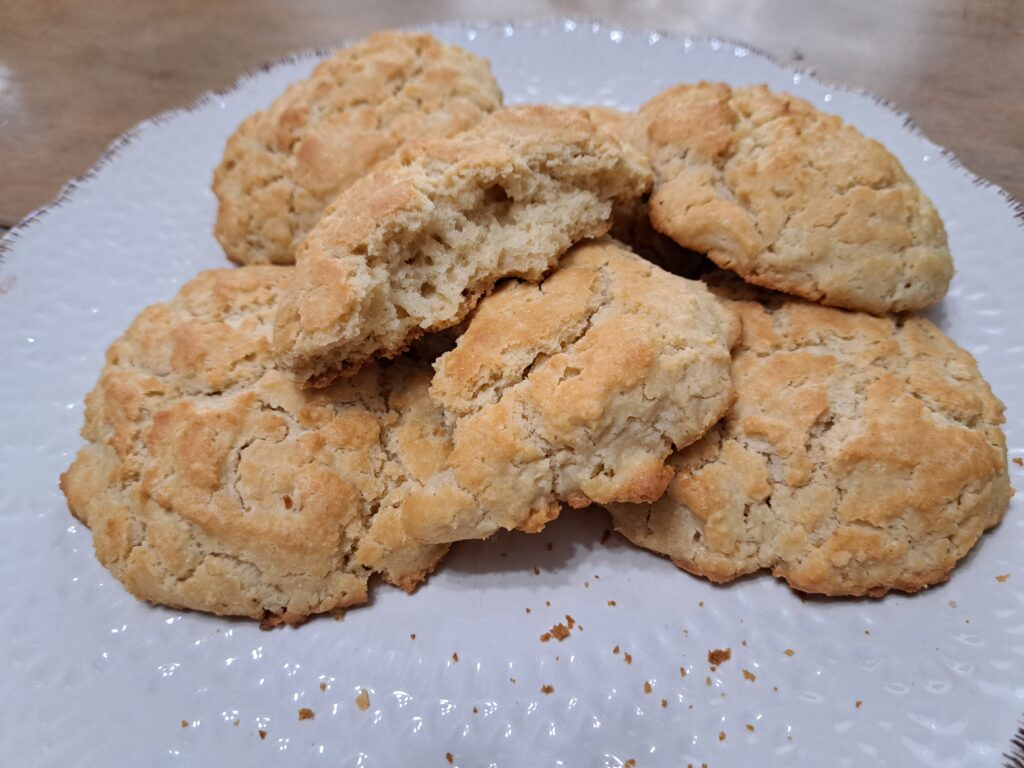
That is exactly what you will get from these gluten-free sourdough discard biscuits. Not a dry, crumbly gluten-free compromise, but a real biscuit: golden on the outside, soft and buttery in the middle, with that classic rich biscuit texture. The sourdough discard adds just enough tang to make the flavor more interesting, without overpowering the buttery goodness that makes a biscuit a biscuit.

Some years ago, I started keeping my own gluten-free sourdough starter. Suddenly I needed a good way to use up all that extra discard! These biscuits quickly became one of my favorite solutions. They are simple, cozy, and practical - easy enough for breakfast, hearty enough for dinner, and especially good warm from the oven.
That said, these biscuits do not have to be a discard recipe. If you do not keep a sourdough starter, then you can skip the starter as an ingredient. Just adjust the amount of milk accordingly. The end result will still be delicious, just without that sourdough kick.
;void(0); "Share on pinterest")
(1) Place the butter (one stick) in the freezer before starting. The colder the butter is, the easier it will be to grate or cut into the dough, and the better it will hold its shape while baking.
(2) Preheat the oven to 425°F. If using a cast iron baking sheet or pan, place it in the oven while it preheats.
(3) In a large bowl, combine the flours, sourdough starter, baking powder, and salt. Stir until the starter is evenly incorporated into the dry ingredients.
(4) Cut the cold butter into the flour mixture. The fastest way to do this is to grate the butter with a cheese grater, which works especially well when the butter is very cold. You can also cut it in with two butter knives or a pastry cutter. The mixture should look crumbly, with small pieces of butter distributed throughout.
(5) Add the milk a little at a time, stirring until the mixture comes together into a soft dough. The exact amount of milk may vary depending on how wet your sourdough starter is, so stop adding milk once the dough holds together and can be shaped.
(6) Divide the dough into 12 to 15 portions, depending on how large you want your biscuits. Lightly shape each portion into a round disk, then place the biscuits on the preheated baking sheet. The biscuits do not need to touch, but it is fine if they are close together.
(7) Bake for about 17 minutes, or until the biscuits are golden brown on top.
(8) These biscuits are best enjoyed warm, straight from the oven. If you do not need the full batch right away, keep the extra dough in the refrigerator and bake only the number of biscuits you need. The dough also freezes well for future meals.
Note: Gluten-free biscuit dough does not spread much when it is the right consistency, so shape the biscuits the way you want them to bake. For the best texture, keep the butter cold, handle the dough lightly, and enjoy the biscuits warm from the oven.
Whipping up a batch of gluten-free sourdough biscuits is pretty simple. The whole process should take about 25 minutes, and there is not much in the way of complicated technique involved. The one step that matters most is cutting in the butter, because that is what gives biscuits their soft, tender texture.
A good gluten-free sourdough starter is vital for gluten-free sourdough biscuits. If you are just starting your sourdough journey, click below to learn how to grow your own sourdough starter!
American biscuits get their signature texture from butter - specifically, cold butter cut into the flour, much like you would do for pie dough. As the biscuits bake, those little pieces of butter melt into the dough, helping create a rich, tender crumb.
Unlike pie crust, biscuits do not need to be dramatically flaky. The goal here is not thin, shattering layers, but a soft, fluffy biscuit with enough structure to split open and fill.
The key is to start with partially frozen butter. When I start making a batch of biscuits, the very first thing I do is put a stick of butter into the freezer. In the time it takes to preheat the oven and mix together the flours and starter, the butter gets just cold enough to easily cut into the flour.
I also find that grating the butter into a cheese grater, instead of cutting it up with a knife, makes the process much easier. The grater minimizes the amount of time I need to spend directly handling the butter, meaning that it stays colder longer.
I am a huge fan of cast iron cookware. It is timeless, sturdy, and most importantly, it bakes things beautifully. Cast iron holds heat extremely well, which means a preheated cast iron baking sheet is already hot and ready the moment the biscuit dough touches it.
That quick burst of heat starts cooking the biscuits from the bottom up right away. The result is a golden, lightly crisp bottom with a satisfying crunch, while the inside stays soft and tender. It also helps the biscuits hold their shape, instead of spreading too much as they bake.
For a baking sheet, I love my Lodge cast iron baking sheet. I use it for biscuits, cookies, and roasted vegetables all the time. It has been wonderfully nonstick for me - baked goods slide right off when they are done - and I have never needed to re-season it.
While this recipe is pretty easy to make, it is a little less forgiving when it comes to flour substitutions. I have tested several gluten-free flours in these biscuits, including sorghum, teff, buckwheat, and rice flour. Of those, rice flour performs the best.
The reason is that this recipe does not include many extra binder ingredients. It relies mostly on the flour, butter, and liquid to hold the biscuit together. With the wrong flour, the biscuits can turn out too dry, crumbly, or gritty. A mixture of white rice flour and brown rice flour has just enough natural stickiness to help the biscuits hold together, while still giving them a lovely tender texture. From there, the chickpea flour adds a bit of hearty richness to balance out the starches and butter.
There is one exception to the "no substitutions" rule here: Bob’s Red Mill All Purpose Baking Flour. This flour blend has the right mix of chickpea flour, starch, sorghum flour, and fava bean flour for these biscuits, and it does not include any gums. How do I know? My first versions of this recipe used Bob’s Red Mill All Purpose Baking Flour.
Since then, I have switched to baking entirely without flour mixes. I find it more flexible to keep the individual flours I like on hand and combine them myself. But if you want to use a gluten-free flour blend for this recipe, that is the one I would choose.
Biscuits are not usually a baked good that requires any rise or fermentation. They achieve their rise through baking powder - not yeast. But if you want a stronger sourdough flavor, you can absolutely make these biscuits ahead and let the starter work its magic on them.
You will want to start with an active starter - not starter fresh from the refrigerator or in dire need of feeding. It needs to be strong. Once you have mixed up your biscuit dough, you can let it ferment for an hour on the countertop, or overnight in the refrigerator.
If you opt for the countertop, keep in mind that your butter will get soft at room temperature. You will want to give it some time in the refrigerator again before baking to let it harden up.
These are a few of the tools and ingredients I like to keep on hand for making gluten-free biscuits at home. A cast iron pan helps the biscuits bake up golden and crisp on the bottom, while buying gluten-free flour in bulk can make regular baking much more affordable.


I do not recommend making any substitutions in this recipe; the texture of the biscuits relies upon this mix of rice and chickpea flours.
One exception: I have used Bob's Red Mill All Purpose Gluten Free Flour (a mix of chickpea flour, starch, sorghum flour, and fava bean flour with no gums) in this recipe to good effect.
These biscuits are best fresh out of the oven, but they will keep for a day or two in the fridge.
That said, if you need to make them ahead, I suggest mixing up the dough, forming it into biscuits, and then keeping the biscuits in the refrigerator or freezer to bake fresh. You can bake these biscuits frozen straight out of the freezer if necessary, and they will come out great!
No, you can use any baking sheet or pan to bake these biscuits. I like using cast iron because it makes them extra crispy on the bottom.
No, if you don't have sourdough starter or discard, you can omit it from the recipe entirely. Just use a little less milk, so your dough does not end up soggy.
Yes. If you want gluten-free biscuits, your sourdough starter must also be gluten-free. Fermentation does not remove gluten, so people with gluten-sensitivity or celiac disease may react to even the little bit of gluten from a regular wheat-based starter.
Yes! Discard recipes are a matter of convenience, not requirement. You can use active starter or discard starter in this recipe.
For a more sourdoughy biscuit, use active starter and let it ferment overnight in the refrigerator before baking.
Yes! If you want to save your biscuit dough for baking later, I suggest pre-forming it into individual biscuits and then putting them in the freezer. You can bake them directly from the freezer as per the recipe instructions when you need them.

In the USA, the word biscuit usually brings to mind a round, soft, buttery quick bread. American biscuits are made by cutting butter into flour, then using baking powder or baking soda to help them rise. But that is not the universal meaning of the word. Biscuit comes from the French bescuit, which in turn came from the Latin biscoctum, which means "twice baked."[source] The original biscuit was a hard, crunchy bread that had been baked twice to dry it out and help it keep longer - not the tender, fluffy American biscuit we know today. That older meaning is still closer to the way the word is used in the UK, where biscuit usually refers to a crisp cookie.

Biscuits came to the American colonies as hardtack: hard "ship’s biscuits" baked until dry enough to survive a long voyage. They were useful, portable, and practical, but not exactly the kind of bread anyone was excited to pull warm from the oven. Once the colonies were more established, biscuits began to change. Cooks added butter or lard, making them richer, and developed "beaten biscuits," which were beaten by hand to work air into the dough.
That process could take an hour or more, and the results were still flatter and more cracker-like than the biscuits we know today. Because they required so much labor, beaten biscuits were most common in households with plenty of kitchen help, and fresh morning biscuits became something of a status symbol.[source]
The real turning point came in the mid-1800s, with the rise of chemical leaveners. Baking soda was used starting in the 1830's, and by the 1850's the soda had been further stabilized and was being sold as something closer to modern baking powder. Those leaveners were the final puzzle piece, allowing biscuits to become lighter, fluffier, and much closer to the tender quick bread we mean when we say "biscuit" today.[source]
Gluten-free sourdough discard biscuits are one of my favorite ways to turn extra starter into something warm, buttery, and genuinely useful. They are quick enough for breakfast, hearty enough for dinner, and close enough to a classic American biscuit that you do not feel like you are settling for the gluten-free version.
Now all that is left is to bake a batch. Head back up to the recipe card and get those biscuits in the oven, or keep scrolling for more gluten-free sourdough recipes to try.
A soft, flexible gluten-free sourdough flatbread with the hearty flavor of whole grain flours. Easy to make and even easier to eat!
A crusty, golden gluten-free sourdough loaf with a soft tangy center and the hearty flavor of whole grain flours.
The key to unlocking all the flavor and nutrition of Sourdough in your gluten free baking. A little bit of patience can lead to a delicious and unique gluten free sourdough starter.

