Think pumpkin, warm spices, custard, and a dollop of whipped cream - isn't that the taste of fall? This gluten free pumpkin pie recipe will let you conjure that fall feel any time of year!
Looking for something specific?

Just imagine: a golden brown caramelized top, and an interior full of creamy goodness. Sugar cream pie is close to a custard pie... but not quite. There's something more there. Something a little bit different.
The ingredients of this pie are rich in every sense of the word. Cream is the star. The heavy cream gives the pie its deeply satisfying texture and flavor. Then you add a dash of warm spices on top: cinnamon, nutmeg, maybe even a little clove. Whatever says "holiday" to you. The result is pure magic.
The best part is, this gluten free pie mixes up like a dream. You only need one bowl for the filling, and the crust requires no pre-baking. Just pour the filling into the crust, and pop it in the oven. Once baked, the pie keeps beautifully in the fridge, meaning that you can prepare it a few days in advance. Sugar cream pie will be all the better for the wait. So if you find yourself in need of a second pie for Thanksgiving or Christmas, look no further than Hoosier pie!

Be warned: this recipe makes a generous amount of filling, suitable for a deep dish pie or two regular depth pies. If you don't need that much, simply halve the recipe. For the crust, I recommend using my gluten free pie crust recipe, which makes ample dough to contain the creamy filling.
;void(0); "Share on pinterest")
(1) Preheat the oven to 350°F.
(2) Make your gluten free pie crust. If using my recipe, add 1-2 tablespoons of raw sugar to give it a little sweetness.
(3) Roll out the crust, and place it in a 9" deep dish pie plate. Crimp or decorate the edges as desired.
(4) In a medium sized bowl, mix together your dry ingredients: sugar, brown rice flour, and salt.
(5) Gradually pour in the heavy cream, whisking just until smooth. Whisk gently to avoid incorporating excess air.
(6) Add the eggs, milk, and vanilla extract, mixing until fully combined but not frothy. Do not over-mix, you want a nice smooth pie, not whipped cream!
(7) Pour the cream mixture into your prepared pie crust. Dot with butter.
(8) Sprinkle cinnamon and nutmeg over the top of the pie. This will give the pie extra flavor, and a beautiful caramel colored finish.
(9) Bake for about 60 minutes, until the center appears set. Give the pie a slight shake; if its done, it will appear firm and not slosh around.
(10) Allow the pie to cool at room temperature for 1–2 hours, then refrigerate until fully chilled. Serve cold for the best texture and flavor.
This is the time to splurge on high quality cream. Because the filling is so simple, the flavor of the ingredients comes through clearly in the finished pie. And the origin of this pie recipe lies in midwestern farms where fresh cream was readily accessible. We want to recreate that!
You can, of course, go to your local grocery store and buy their brand of whipping cream. It will work fine in this pie. But there are differences between creams.
First of all, in the United States, cream is generally classified by fat content. Heavy cream typically contains at least 36% milkfat, while light cream ranges from 18-30% milkfat.[source] For this pie, a higher-fat cream will give you the best texture and flavor. So look for heavy cream.
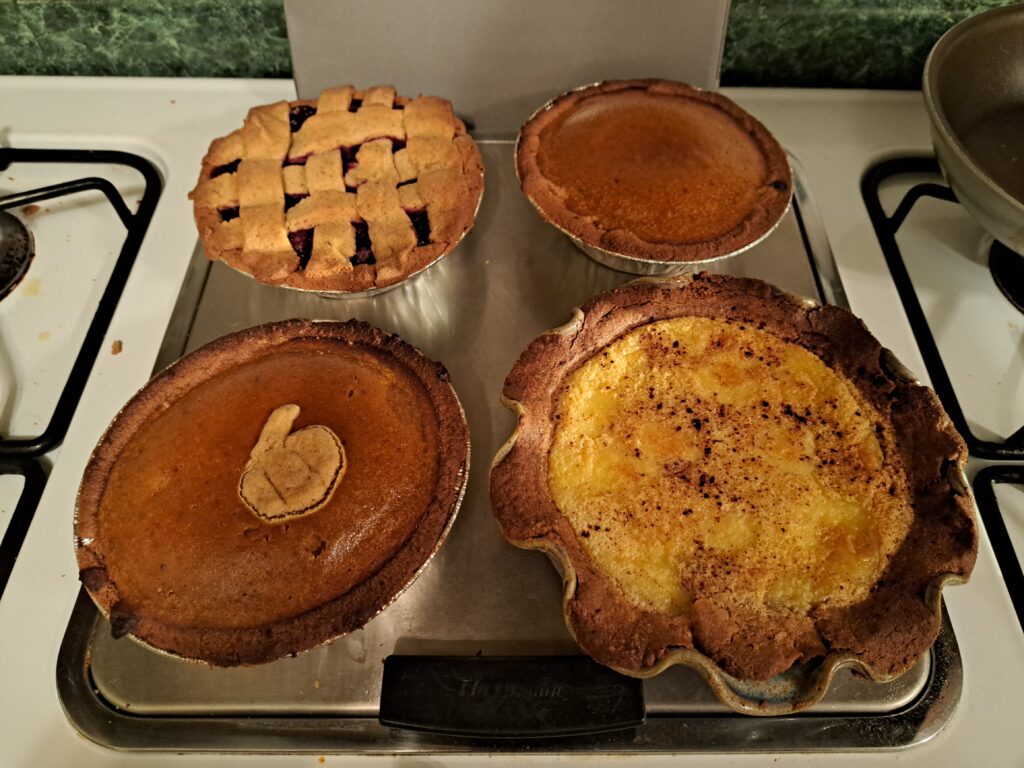
A selection of mini-thanksgiving pies; the sugar-cream pie is on the bottom right!
Secondly, if you look at the ingredient labels, you may notice that some big brand whipping creams include stabilizers such as carrageenan or gums. These are added to improve texture and consistency, especially for whipping, and to extend shelf life. This came as a shock to me when I first checked the labels, because I grew up thinking that cream was just cream, and nothing else. You specifically do not want to whip the cream in this pie, so look for creams that don't have extra additives. We want pure rich flavor.
Finally, many heavy cream options are homogenized. This means that the fat in the cream has been broken up into smaller droplets, so the cream stays evenly mixed rather than separating. This is done for both convenience - less shaking of the bottle required before using - and consistent texture.[source] There's nothing inherently wrong with the process, but like the addition of stabilizers, it does change the character of the cream.
Many smaller dairies offer cream with minimal processing, often non-homogenized and without added stabilizers. These tend to have a fuller flavor and a richer mouthfeel.
If you live in the Midwest, there is a good chance you have access to local dairies through your grocery store or nearby markets. Here in east-central Illinois, we have Kilgus Farms, which produces non-homogenized milk and cream with excellent flavor. If you have not tried a local source, it is well worth seeking one out.
When a recipe relies on just a handful of ingredients, quality matters. Using a good cream will give you a rich pie, worthy of the holidays.
(Please note, I am not affiliated with Kilgus Farms. I simply enjoy their products.)
The ideal texture of this pie is that of a nice firm custard, that cuts without too much fuss. It should not be loose or "goopy." Achieving that ideal texture is probably the biggest challenge in making sugar cream pie, and it has everything to do with the cook time, and the cooling time.
When you check on the pie in the oven, give it a little jiggle. If it is firm and there is no hint of liquid sloshing around, then the pie is done. Take it out!
Alternatively, depending on the exact fat content of your cream, you may see it bubbling instead of firming up. In that case, the bubbles need to reach across the entire surface of the pie. Once the whole pie is bubbling, you know its done. Don't worry about any jiggling - it will firm up the rest of the way in the fridge.
And speaking of the fridge, you will want this pie to cool overnight. This will greatly improve the texture, and give the flavors time to blend.
This recipe calls for brown rice flour, which acts as a thickener and causes the pie to set correctly. I like using brown rice flour because it has strong binding properties, and lends a soft texture without sacrificing too much body - it is, after all, a wholegrain flour. If you are curious to learn more about brown rice flour and its uses in baking, you can check out my brown rice flour baking guide.
Sweet or white rice flour will also work in a pinch, though I personally find the thickening properties of brown rice flour to be stronger, with a more "expected" texture.
The next best choice is a starch, like cornstarch or tapioca starch. These are known for being very flavor-neutral, and may help achieve a perfectly white sugar cream pie. But they are starches, which means most of the nutrition is gone. The main upside to using them is aesthetics.
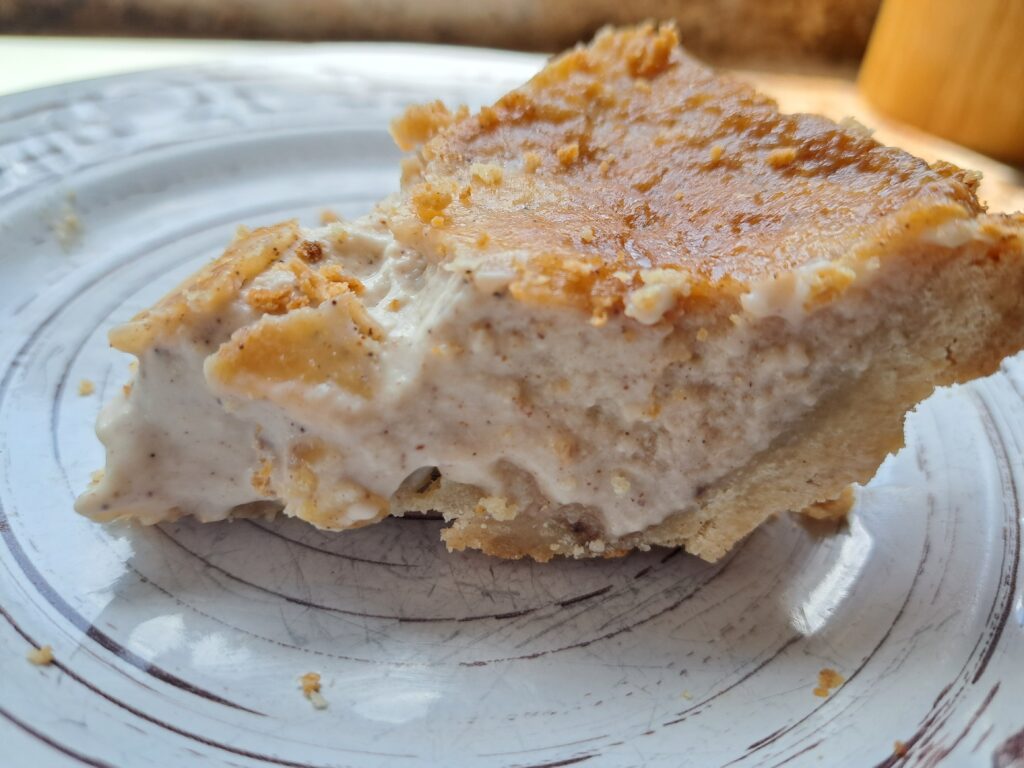
A slice of gluten free sugar cream pie
You can also use an all purpose gluten free flour mix as thickener. These usually include a combination of rice flour, starches, and gum, and have great thickening properties.
I do not recommend using other gluten free flours. Many of them will simply not do the job. Sorghum, Teff, Almond, Coconut - they are all amazing in their own ways, but they will not bind the other ingredients together, leaving you with a soupy mess.
I like to include a little blackstrap molasses in this recipe, since that brings a more "spicey" flavor to the pie. The one downside is that the addition of molasses makes the pie take on a a beige color, and you loose any sort of contrast with the crust. This is entirely an aesthetic concern, and I personally think the flavor is an adequate tradeoff. But if you want a perfectly white sugar cream pie, you will want to either use a very light molasses or skip it altogether.
Yes! Store bought gluten free crusts are pretty good in my experience, and you can use one with this pie. Just note that store-bought crusts are often not deep dish, and so you may have extra filling left over.
When you go to check the pie in the oven, give it a little shake. If the center is set and firm, take out the pie. You can read more about this in the recipe notes.
Yes! I have made this recipe many times with whipping cream, and it comes out great. Pure heavy cream will give you a greater depth of flavor, but is not strictly necessary for an enjoyable pie.
Yes! In fact, I greatly recommend it. This is not a pie you want to serve straight out of the oven - it benefits from cooling at least overnight in the fridge. You can easily make the pie 2-3 days ahead of time without sacrificing flavor or texture.
I recommend serving this pie cold for the best texture. A sugar cream pie should be firm and cut easily, which is hard to achieve if it is still warm.
Yes, with caveats. I have made this pie with white rice flour, tapioca starch, and all purpose gluten free flour mixes, and it came out fine; I cannot vouch for every sort of gluten free flour producing good results. You can read more about this in the recipe notes.
Sugar Cream or Hoosier pie comes from the Midwest, and is often credited to the Shaker or Amish communities in Indiana. The oldest known recipe purports to be from 1816 - which is also, incidentally, the year Indiana became a state - but perhaps it was being made even before then.[source]
The pie is traditionally made with ingredients that would have been common in a farm pantry in the 19th century: milk or cream, sugar, and maybe eggs. The eggs are actually a very controversial ingredient; the traditional sugar cream pie is a very simple mix of cream, flour, and sugar which you mix up with your hands in the pie plate itself to avoid whipping the cream (hence another name, "Finger Pie"). The addition of eggs makes it into more of a custard pie - which is delicious, but a slightly different thing.
Because sugar cream pie is made from simple pantry ingredients, it is often grouped with what are now called “desperation pies.” These are pies that rely on staples like sugar, dairy, and eggs rather than seasonal ingredients such as fresh fruit. They became especially common in times and places where access to fresh produce was limited, whether due to season, geography, or economic constraint.[source]
The term itself is modern, but it reflects a very real pattern in traditional cooking: making something satisfying from what was readily available. In that context, "desperation pies" offered a way to create a dessert without relying on ingredients that were not always accessible.
Of course, today we have year-round access to fresh and frozen fruit, and good cream is often one of the more expensive ingredients in this recipe. Still, the idea behind the pie remains compelling. It is a reminder that simple ingredients, used well, can produce something rich, comforting, and enduring.
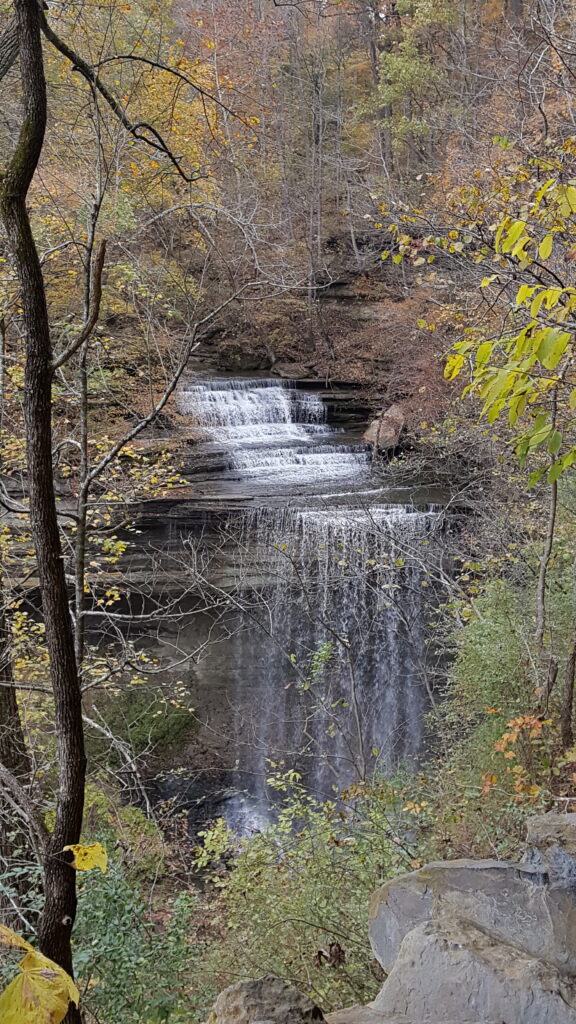
Clifty Falls State Park, Indiana
Waterfalls and pie, what's not to love?
Among the many names for sugar cream pie is the rather curious moniker "Hoosier Pie." The name points directly to its Indiana origins, where the dessert has long been a staple and a point of local pride.
But what, exactly, is a Hoosier?
Today, the answer is simple: a Hoosier is a resident of Indiana. The term has been in common use since at least the early 1800s and is now the official demonym for the state. Indiana residents have embraced it so fully that it appears everywhere, from university teams to everyday conversation.[source]
Where the word came from, however, is much less certain.
The first written instances of the word Hoosier crop up in the 1830's, and almost immediately after, people began asking the question of where the odd word had come from. They didn't know back then either, but some entertaining possibilities were suggested. One such possibility was that it came from the phrase "Who’s here?" shouted between cabins. Another was that it referred to the pugnacious nature of Indiana rivermen, who were so good at fighting and shutting up anyone who offended them that they became "Hushers" and then that term turned into Hoosier.
A slightly more serious etymological suggestion is that the word is related to the old English word "hoo" which meant "hill." In other words, that it started as a reference to "hill people" living in Appalachia, and then, as those people moved down into the Midwest, was applied to their descendants living in Indiana.[source]
In the end, no one knows for certain. What began as a mysterious nickname has become a badge of identity, and in the case of sugar cream pie, a reminder of the region where the dish took root.
Given its deep roots in the region, it is no surprise that sugar cream pie is widely considered the unofficial state pie of Indiana. While there was an effort in 2009 to formally recognize it, the bill ultimately did not pass.[source] Even so, the association has endured, and websites like visitindiana.com refers to it as the state’s "official unofficial" pie.
In practice, the distinction hardly matters. Sugar cream pie has been part of Indiana’s culinary identity for generations, long before any formal designation was proposed. It is a pie tied to place, to history, and to the habits of everyday kitchens.
From its roots as a pantry-based dessert to its place as a Midwestern classic, sugar cream pie reflects a way of cooking that values simplicity and resourcefulness. It does not rely on elaborate ingredients or complicated technique, but instead on doing a few things well.
That same idea carries through to the gluten-free version. With good ingredients and a careful approach, the result is just as rich, smooth, and satisfying as any traditional pie.
Think pumpkin, warm spices, custard, and a dollop of whipped cream - isn't that the taste of fall? This gluten free pumpkin pie recipe will let you conjure that fall feel any time of year!
A buttery gluten free pie crust that you can use for any sort of sweet pie: fruit, custard, or no-bake. Not only is the taste delicious, but it is workable, rollable, and even sturdy enough for beautiful pie crust decorations.



You did not make this when you were home. U OWE ME GIRL!
Do you see how much cream is in this thing? Need to make it in the summer and then eat nothing but salads for a few days afterwards. 😛