


Fluffy and buttery, these gluten-free sourdough biscuits are an easy homemade side for breakfasts or comfort-food dinners.
Looking for something specific?


This gluten-free sourdough flatbread is soft enough to fold, sturdy enough to wrap, and flavorful enough to eat warm from the pan with nothing more than a little butter or ghee. The sourdough gives it a gentle tang, while the sorghum flour brings this warm, almost nutty flavor that becomes especially delicious when it hits hot oil.
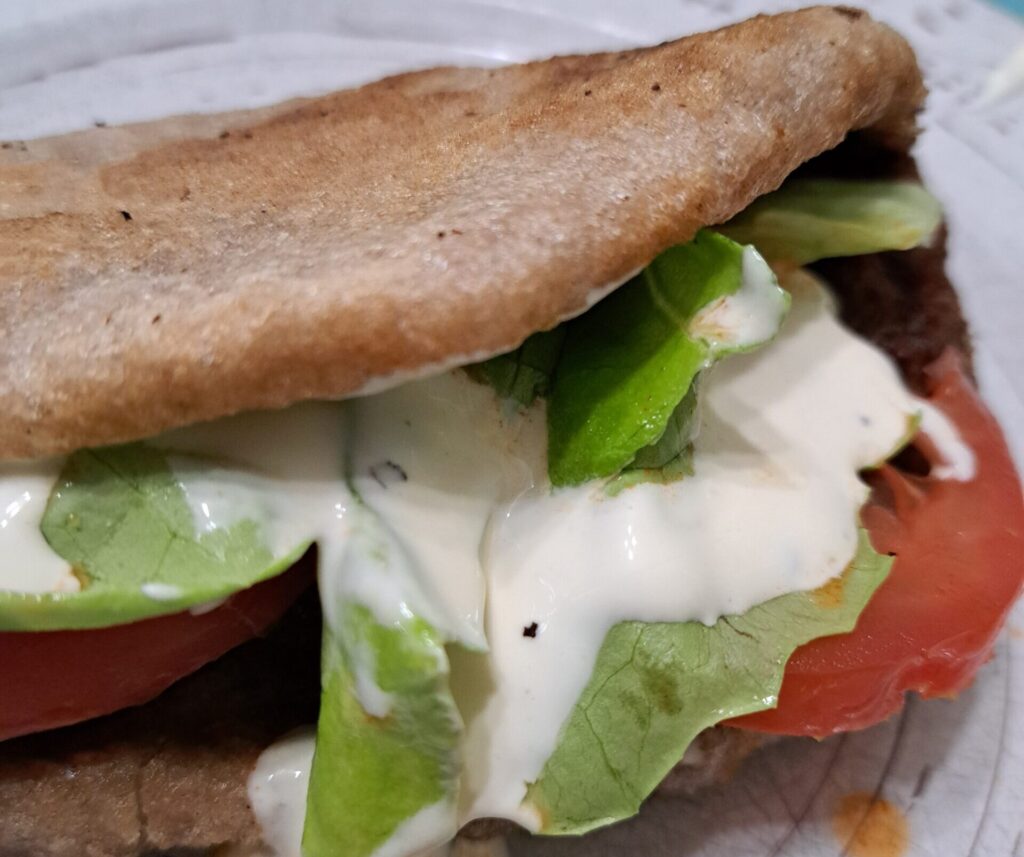
Use it for a fried egg sandwich in the morning, wrap it around falafel for lunch, tuck it around gyro fillings for dinner, or press it into service as a quick personal pizza crust. It fills that pita/naan/tortilla-shaped hole that can be so frustrating in gluten-free cooking, and it does it with whole grain flours, real flavor, and a wonderfully flexible texture.
Because this recipe does not call for a long fermentation time, it is really more of a sourdough discard recipe. You can use your starter whether it is active and bubbly or due for a feeding; either way, it adds a little sourdough flavor, extra nutrition, and depth to the flatbread.
And if you are keeping a sourdough starter, you already know there is always discard to go around. This recipe is one of my favorite ways to turn that extra starter into something genuinely useful.
;void(0); "Share on pinterest")
(1) In a medium-sized bowl, add the dry ingredients to your sourdough starter: sorghum flour, brown rice flour, baking powder, and salt. Mix until the starter is well distributed and the mixture resembles coarse sand.
(2) Warm the water slightly; about one minute in the microwave is usually enough. Stir in the psyllium husk and let it sit for 1-2 minutes, until the water thickens into a gel.
(3) Pour the psyllium gel into the flour mixture while mixing. The dough should come together, but still look loose and slightly dry.
(4) Add the Greek yogurt and continue mixing until fully incorporated. At this point, the dough should look more hydrated, soft, and workable.
Note: If you want a proper fermented sourdough flatbread, then you can allow the dough to rise for up to two hours at room temperature, or overnight in the refrigerator, before cooking. See the recipe notes for more information.
(5) Begin heating your pan. I use cast iron, which can take a few minutes to come up to temperature. Add about a tablespoon of oil.
(6) Divide the dough into eight portions and roll each one into a ball. Lightly dust your work surface and the dough with extra brown rice flour.
(7) Roll out the first portion to about 1/4-inch thick. You should end up with a round flatbread about 6-7 inches wide.
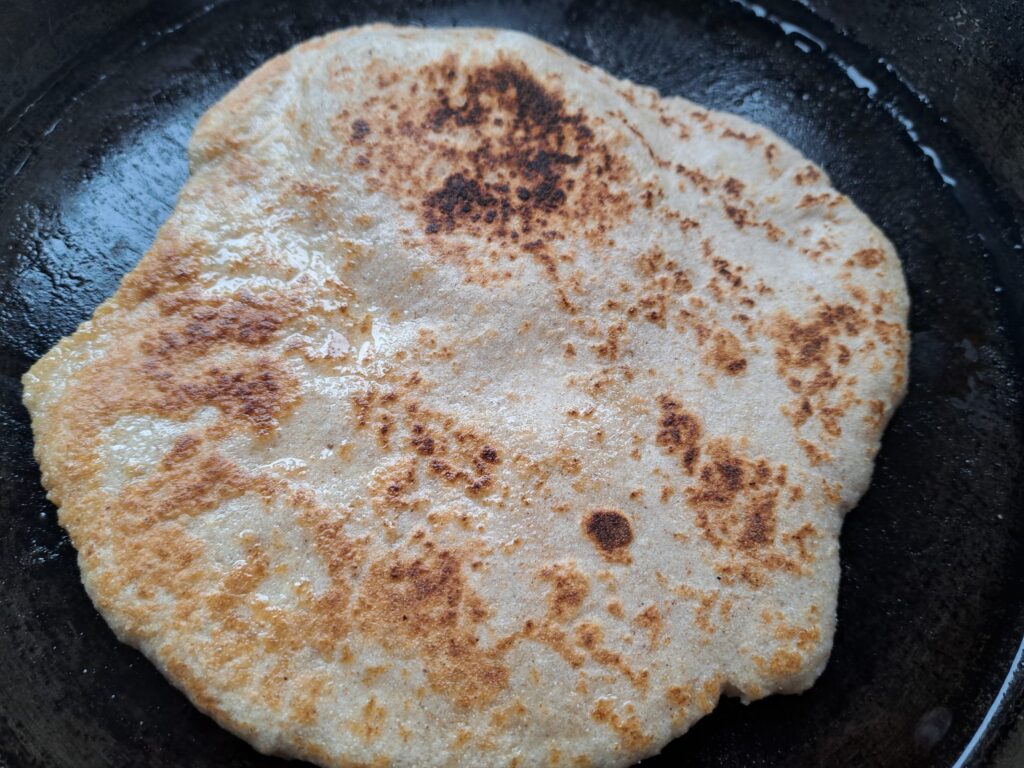
(8) Place the flatbread in the hot pan. After about a minute, flip it and brush the top with a little oil. This helps keep the bread moist and encourages it to bubble.
(9) Cook for 1-2 minutes per side, or until both sides have golden brown spots. While one flatbread cooks, roll out the next dough ball so it is ready to go.
(10) Serve warm as a sandwich wrap, or simply with butter.
Flatbread is a source of instant (or at least quick) gratification in the bread world. It does not need hours to rise tall. You mix it up, roll it out, and can start baking it immediately. In 30-45 minutes you could have a stack of fresh flatbread for lunch.
The trick with gluten-free flatbread is to make sure it has enough structural strength to hold together and remain flexible even after cooking. In this recipe, the psyllium husk provides the structure, the yogurt adds tenderness, and the whole grain flours bring both flavor and structure. The sourdough starter tops the whole thing off, adding a little bit of extra flavor depth.
A good gluten-free sourdough starter is vital for gluten-free sourdough flatbread. If you are just starting your sourdough journey, click below to learn how to grow your own sourdough starter!
As written, this recipe does not require any fermentation time. That is intentional: one of the best things about flatbread is that it can be made relatively quickly. But if you have time to make the dough ahead, even a short ferment will deepen the flavor and bring out more of that sourdough goodness.
For extra rise and flavor, start with an active sourdough starter - one that has been recently fed and is bubbly. Once the dough has come together, cover it with a damp towel and let it rest on the countertop for 1-2 hours.
I do not recommend leaving this dough at room temperature much longer than that because it contains yogurt. There is no exact moment when a dough like this “goes bad,” since temperature and kitchen conditions both matter, but the general recommendation for perishable foods such as dairy is not to leave them out for more than 1-2 hours.[source]
For an even stronger sourdough flavor, you can also transfer the covered dough to the refrigerator and let it ferment overnight. The next day, roll and cook the flatbreads as usual.
A good gluten-free flatbread needs to do several things at once. It has to roll out without crumbling, cook up tender instead of dry, and stay flexible enough to fold around fillings. Since we do not have gluten to provide that stretch and structure, the difference has to be made up from a combination of flours and other ingredients.
Brown rice flour serves as the base of this recipe. It holds moisture well, and creates a solid structure for the other ingredients, while not overwhelming with an extra flavor. This allows the sorghum and sourdough to shine.
You could make this recipe entirely with brown rice flour. But adding sorghum gives it an extra heartiness. Sorghum has a naturally warm, slightly sweet, whole grain taste that works beautifully in flatbread, especially when cooked in a little oil or ghee. As the flatbread browns in the pan, the sorghum flour develops a deeper, almost nutty flavor that makes the bread taste rich and satisfying instead of just "gluten-free."
Psyllium husk is what gives the dough its flexibility. When mixed with warm water, it forms a gel that helps bind the flours together and gives the dough enough stretch to roll, lift, and fold. Without it, the flatbread would be much more likely to crack or fall apart.
The yogurt adds moisture, tenderness, and a little extra tang. It softens the dough, helps keep the finished flatbread from drying out, and works nicely with the sourdough flavor already in the recipe. Together, the yogurt and psyllium husk are what make this flatbread soft and bendable rather than brittle.
(You can read more about brown rice flour, sorghum, and psyllium husk in my gluten-free ingredients guides.)
This flatbread tastes best fresh from the pan. It will never be softer, more flexible, or more flavorful than it is right after cooking.
You can refrigerate cooked flatbread for a day, but it will be much stiffer the next day, even after reheating with a little oil. For that reason, I recommend cooking only what you need for one meal and storing any leftover dough in the refrigerator instead. The dough will keep for several days, and unlike the finished flatbread, it only gets better with time. That extra rest in the refrigerator gives the dough more time to ferment, bringing out a deeper, more delicious sourdough flavor.
Personally, I usually cook half the batch on the first day, without any extra proofing, and save the other half of the dough for the next day. The second-day flatbread is always better.
Yes! This recipe does not call for a specific proof time, so you can use discard or active sourdough starter.
You could also omit the sourdough starter and just add in a little more brown rice flour to compensate. But I greatly recommend the sourdough starter!
No, you can cook up flatbread as soon as the dough is mixed up. Flatbread is meant to be quick!
That said, you may find that the flavor is enhanced with fermentation time. See the recipe notes for more details.
In part. You can make this recipe entirely with brown rice flour, if needed. I do not recommend substituting the rice flour, however, since it contributes greatly to the structure and flexibility of the dough.
Absolutely! This flatbread is a great substitute for pita or naan in sandwiches and wraps.
This recipe makes 8 flatbreads.


This gluten-free flatbread recipe makes a great gluten-free deep dish pizza crust - no modifications needed!
I searched for years for a good gluten-free pizza dough recipe. The default is usually thin crust, and don’t get me wrong: I love a good thin crust pizza. But there is something so satisfying about a thick, doughy pizza crust, slathered in tomato sauce and covered with cheese and toppings. I tried different gluten-free pizza dough recipes for years, but most of them turned out just... okay.
This dough makes an actually good 12" pizza crust.
To use it for pizza, mix the dough as directed. Instead of dividing it into individual portions, roll the whole batch into one large round. I usually make a nice thick 12-inch crust, but you can roll it thinner if you prefer.
Lightly oil your pizza pan with olive oil, then transfer the dough to the pan and bake for 20 minutes at 400°F. At this point, the crust will be partially baked, but not finished. Add your sauce, cheese, and desired toppings, then return the pizza to the oven for another 10 minutes, or until the cheese is bubbly and golden.
This gluten-free sourdough flatbread is one of those practical recipes that earns its place in the kitchen. It is quick enough to make without planning ahead, flexible enough to fold around eggs, falafel, or gyro fillings, and flavorful enough to eat warm from the pan with butter or ghee. And if you have a little extra time, the dough only gets better with a short rest or an overnight ferment in the refrigerator.
It is also wonderfully adaptable. Cook a few rounds for lunch, save the rest of the dough for tomorrow, or roll the whole batch into a thick, satisfying gluten-free pizza crust. However you use it, this recipe is a simple way to turn sourdough discard and whole grain flours into something warm, useful, and genuinely delicious.
Fluffy and buttery, these gluten-free sourdough biscuits are an easy homemade side for breakfasts or comfort-food dinners.

